
Beyond Banking: Building a Safety Net for Small Business
Project Type: New Product Strategy / Business Innovation
Role: Design Executive and Strategy Lead
Deliverables: Opportunity Strategy, Customer Research, Cross-LOB Alignment, Experience Vision, POC, Executive Business Case, Pilot
Introduction
Chase had a strong relationship with millions of small-business customers, but much of that relationship centered on the immediate needs of running a business: managing cash flow, accepting payments, accessing credit, and moving money.
We saw an opportunity to think beyond those transactions.
Independent business owners were increasingly responsible for benefits traditionally provided by an employer — including retirement planning, insurance, tax planning, emergency savings, and longer-term financial security. Yet those needs were fragmented across providers, products, and experiences.
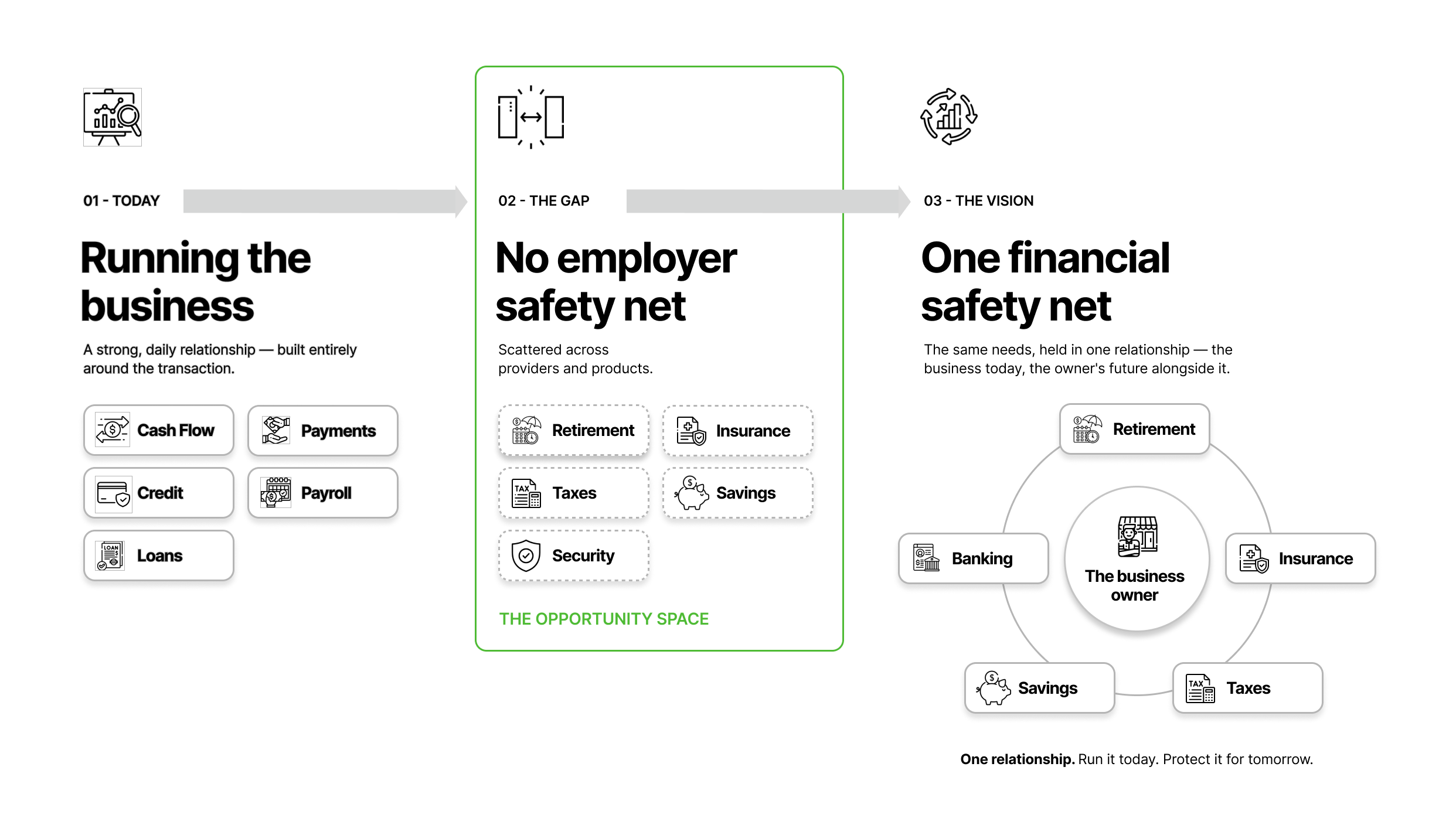
The opportunity was bigger than adding another banking feature.
Could Chase become the financial safety net for the small-business owner, helping customers run their business today while preparing for their future?
Approach
Research revealed that small-business owners didn't separate their business and personal financial lives. “Business IS personal.”
Cash flow, taxes, insurance, savings, retirement, and business growth were interconnected, yet the support available to owners remained fragmented.
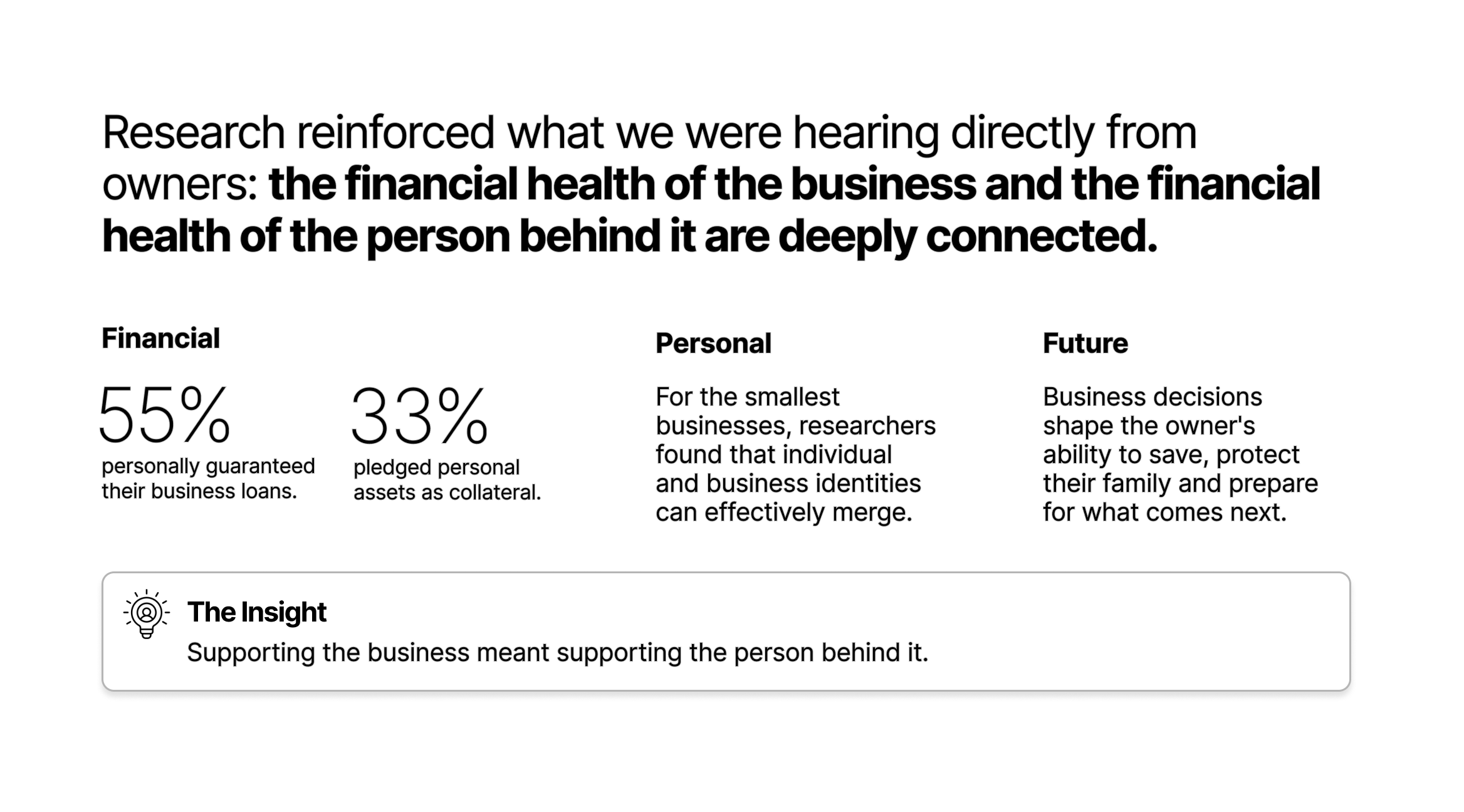
This reframed the opportunity: Could Chase move beyond helping owners manage their business to helping them build long-term financial security?
The opportunity was to connect Chase's existing capabilities into a more holistic financial relationship — one centered on the owner, not individual products.

Roughly 40% of small business owners have no personal retirement savings
Understanding an Underserved Customer
Rather than immediately designing a product, we first needed to understand whether this was a meaningful customer problem.
We spoke with 237 hustlers and sole proprietors across 14 industries, with 61% already Chase for Business customers.
Several themes emerged.
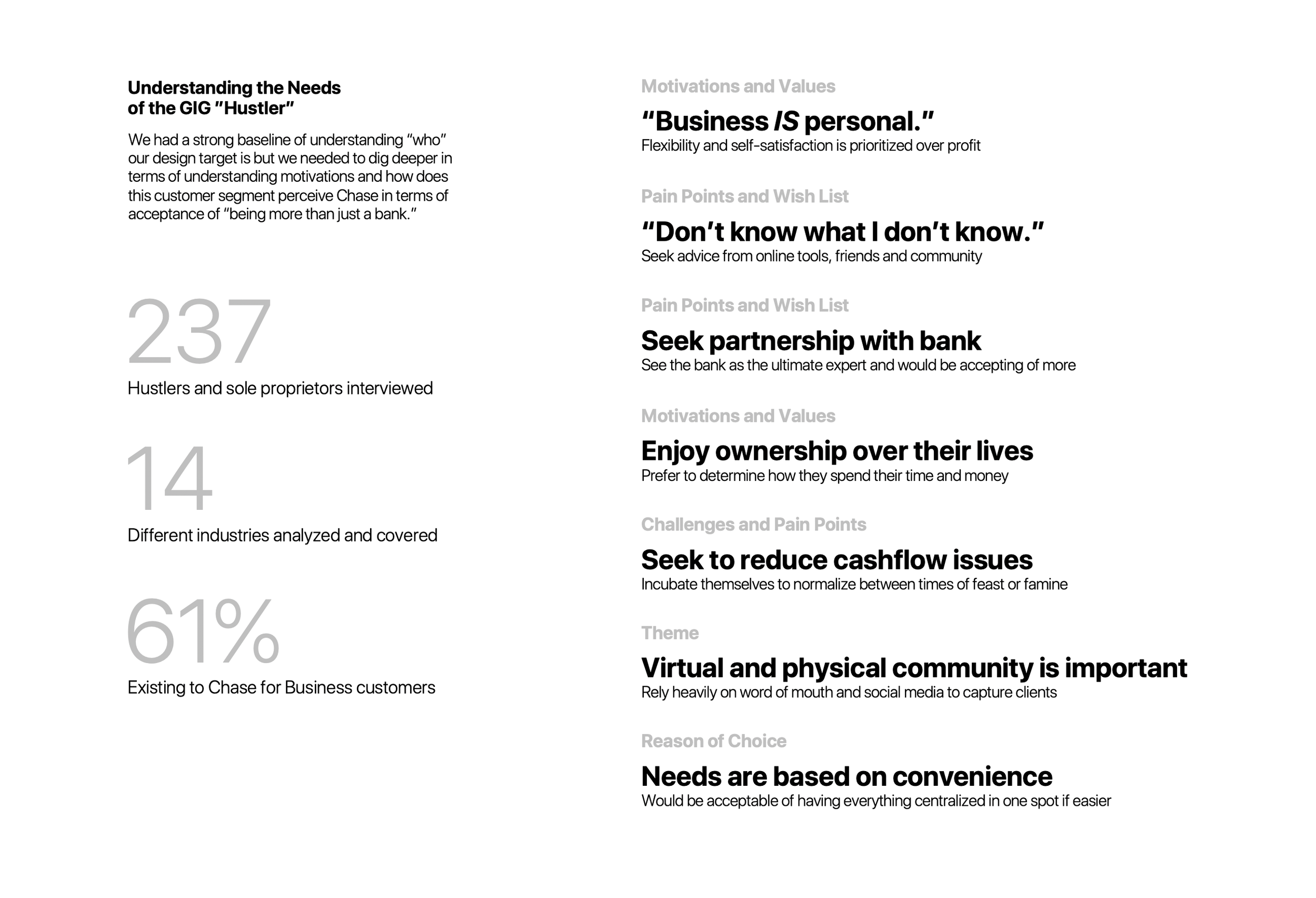
Small-business owners wanted control over their lives and finances, but irregular income created persistent anxiety. They frequently sought advice from friends, online communities and their bank. And critically, they were receptive to Chase providing services beyond traditional banking — particularly if those services could be centralized and made easier to manage.
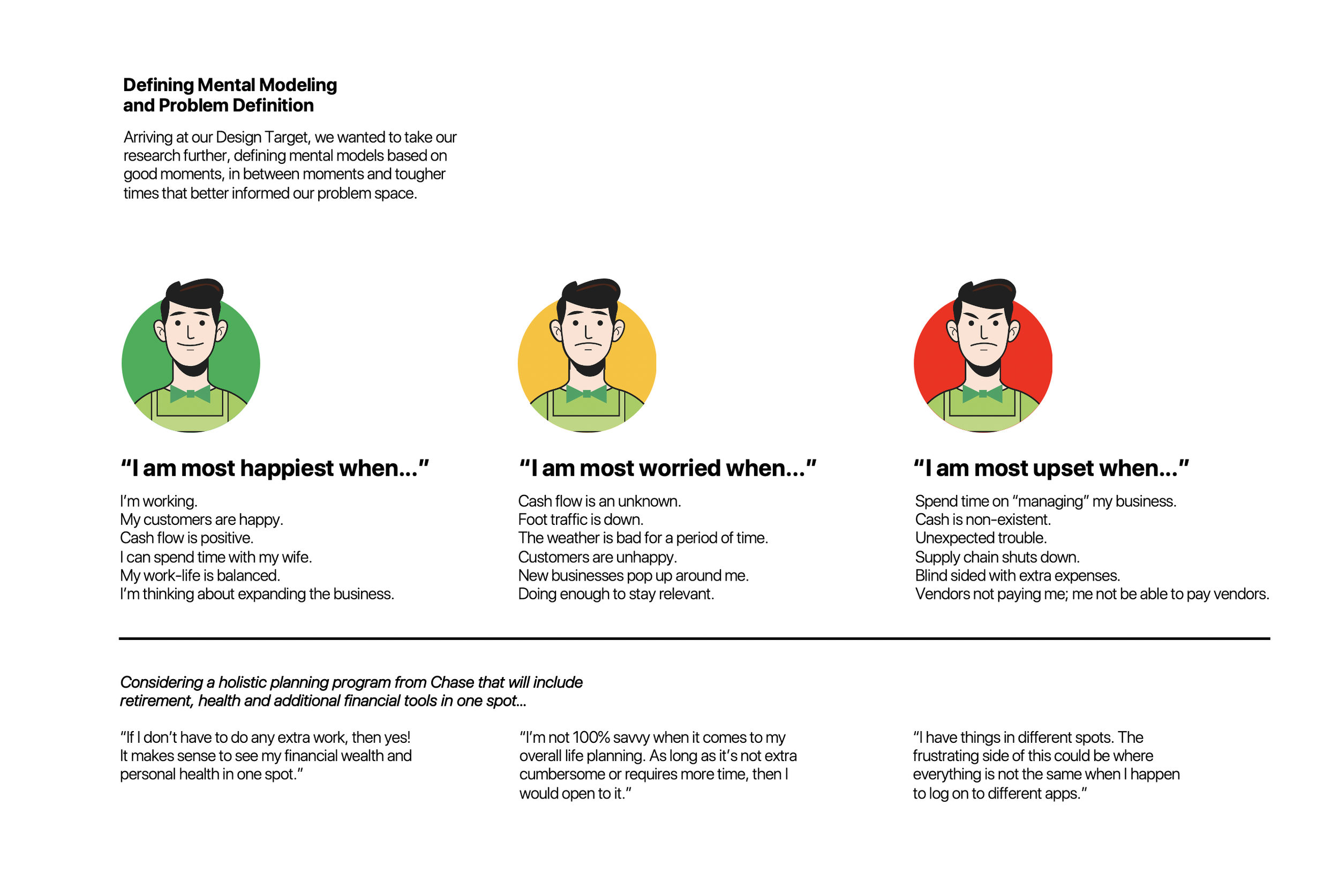
The research reframed our original question.
It wasn't simply: How might Chase sell retirement products to small businesses?
It became: How might Chase help independent business owners create the financial safety net they would normally receive from an employer?
That distinction opened a much larger opportunity.
Reframing the Customer
We also realized that defining the audience simply as a “gig worker” was too narrow.
Our research pointed toward a broader customer archetype: the Aspirer — someone who might begin as an independent operator but ultimately wanted to grow, stabilize and build something larger.
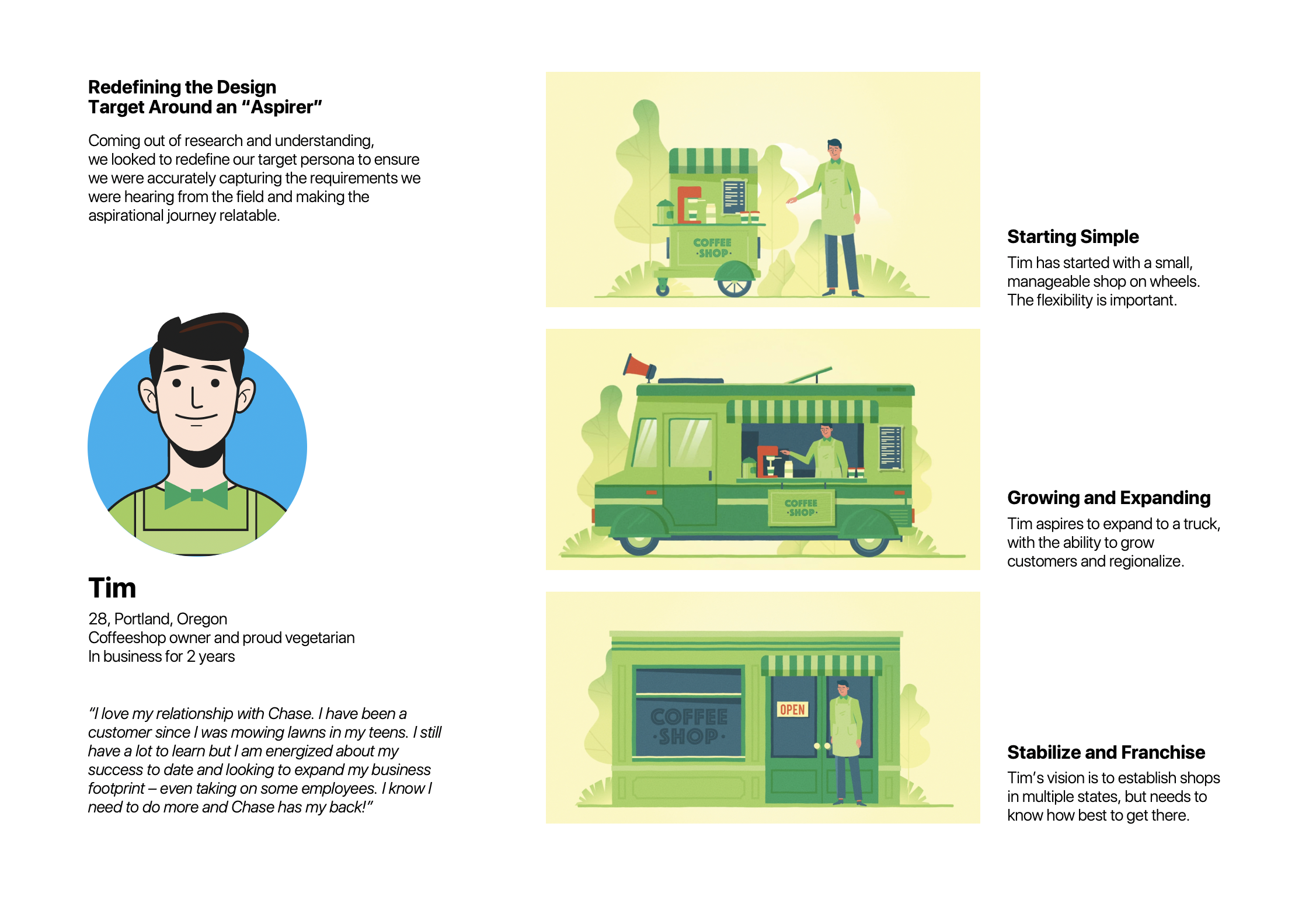
That changed the strategic conversation. We weren't designing a product for a temporary employment category.
We were designing a financial relationship that could grow with the customer.
Finding the Moment That Matters
One of the most important insights came from mapping the owner's financial mindset across good, uncertain and difficult moments.
When things were going well, owners thought about growth and expansion.
When things became uncertain, their attention immediately shifted toward cash flow.
And when something unexpected happened — lost business, supply-chain disruption or an unplanned expense — the lack of a financial buffer became painfully visible.
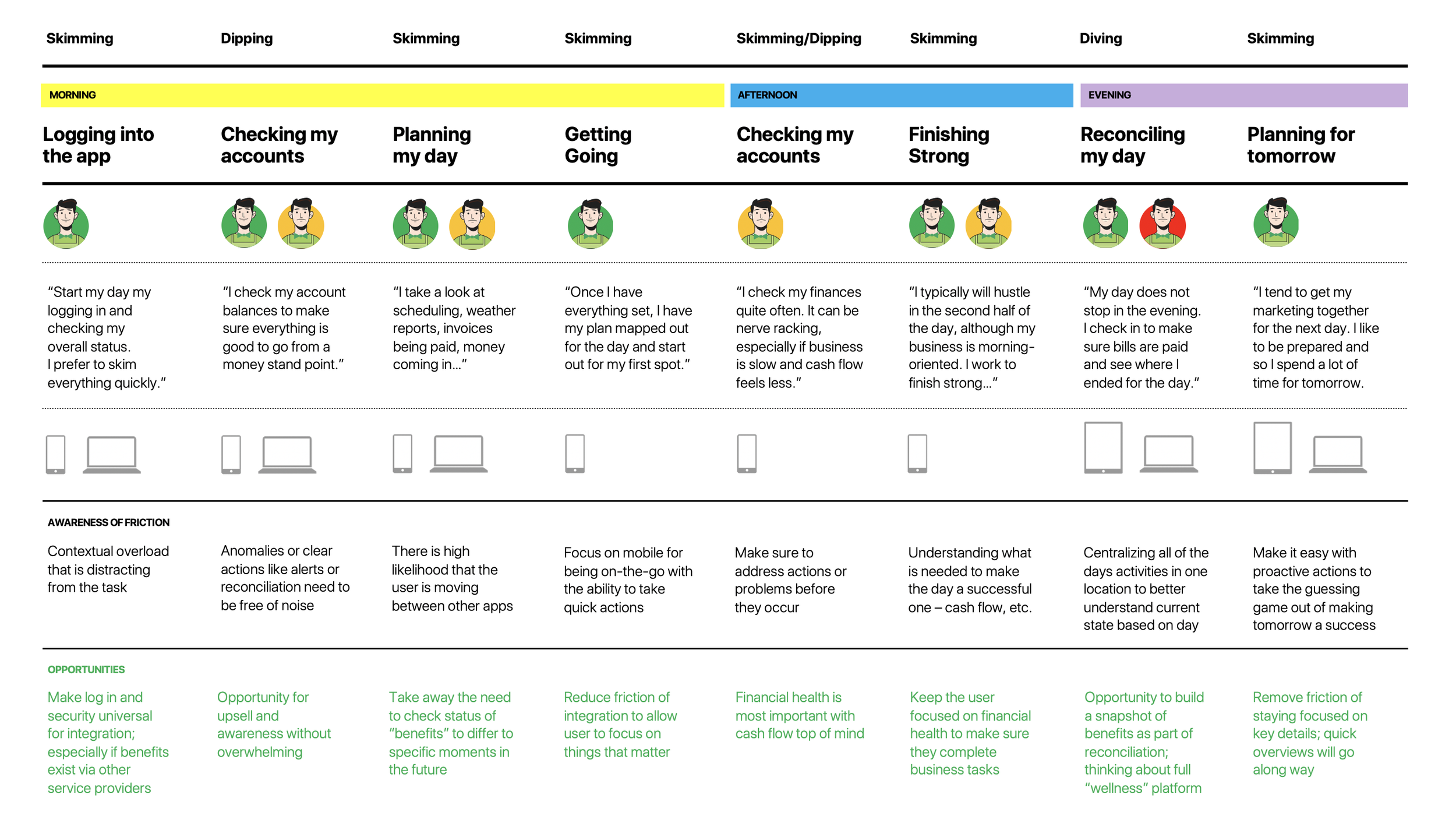
Retirement therefore couldn't exist as an isolated product.
It needed to be part of a broader financial plan that balanced: today's cash flow with tomorrow's security.
That became the foundation for the POC.
Turning the Opportunity Into a Business
The customer opportunity crossed traditional organizational boundaries.
Delivering it meant bringing together capabilities that lived across different parts of the firm — business banking, retirement/investments, payments, insurance/benefits, digital, technology and servicing/advice.
My role became as much about organizational design as experience design.
I worked across lines of business to create a shared view of the customer opportunity, connect existing capabilities into a coherent proposition, and build the evidence necessary to take the idea to senior leadership. Rather than asking each organization to fund a large new platform upfront, we used design to make the opportunity tangible.
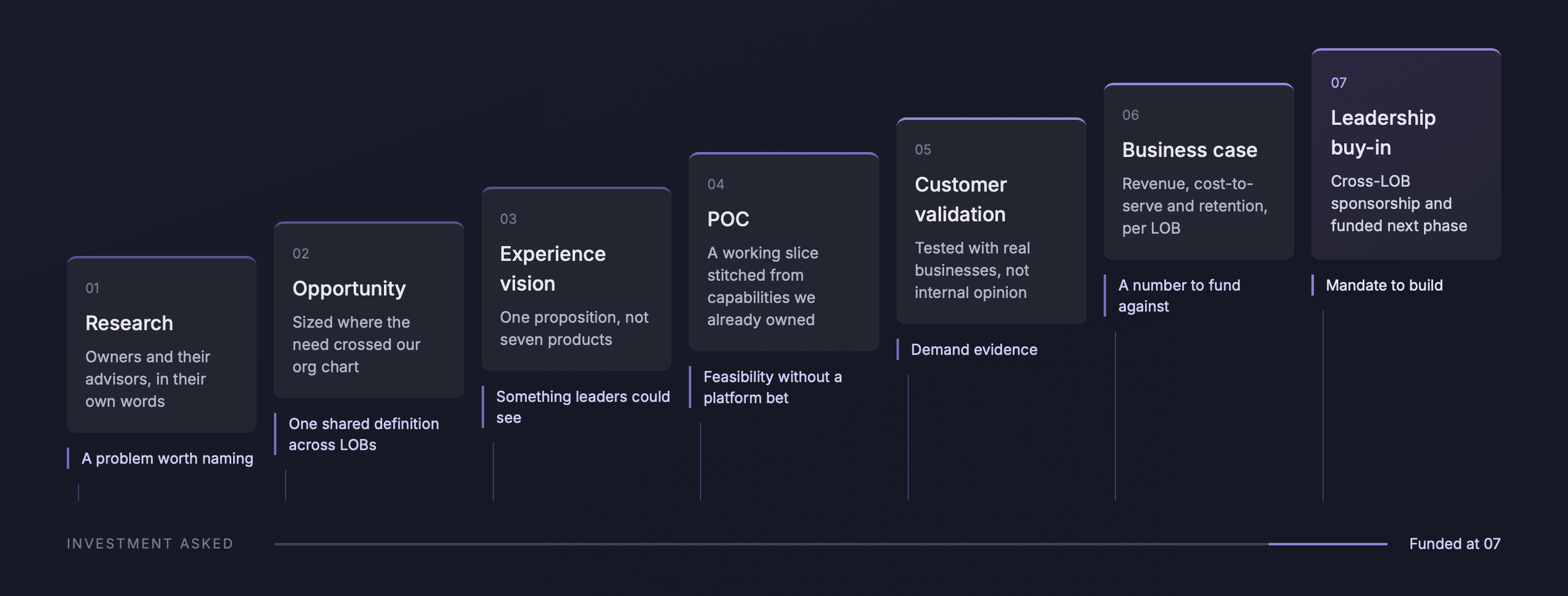
Building the POC
We designed a proof of concept around a simple idea: One financial safety net. One place to manage it.
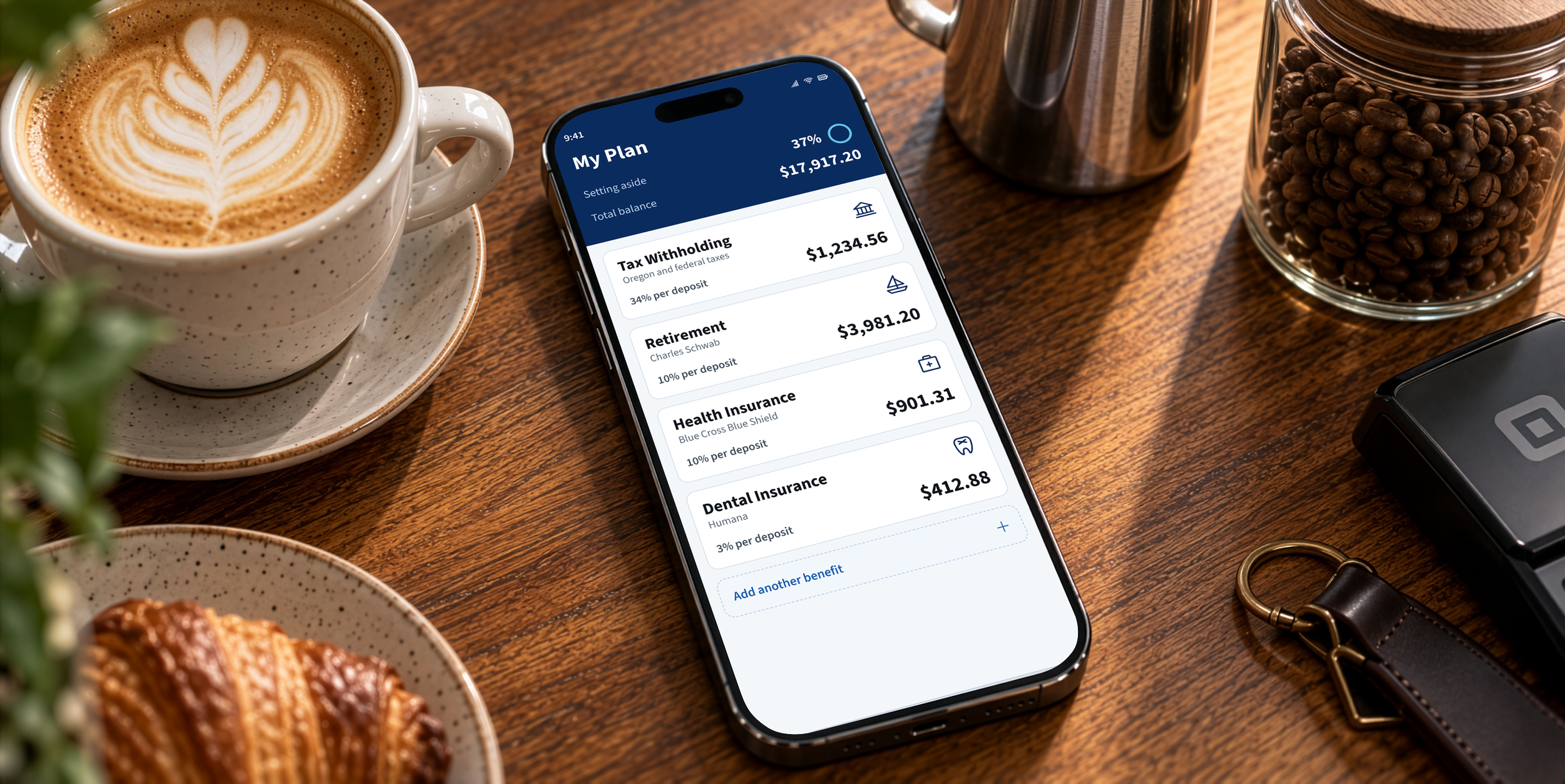
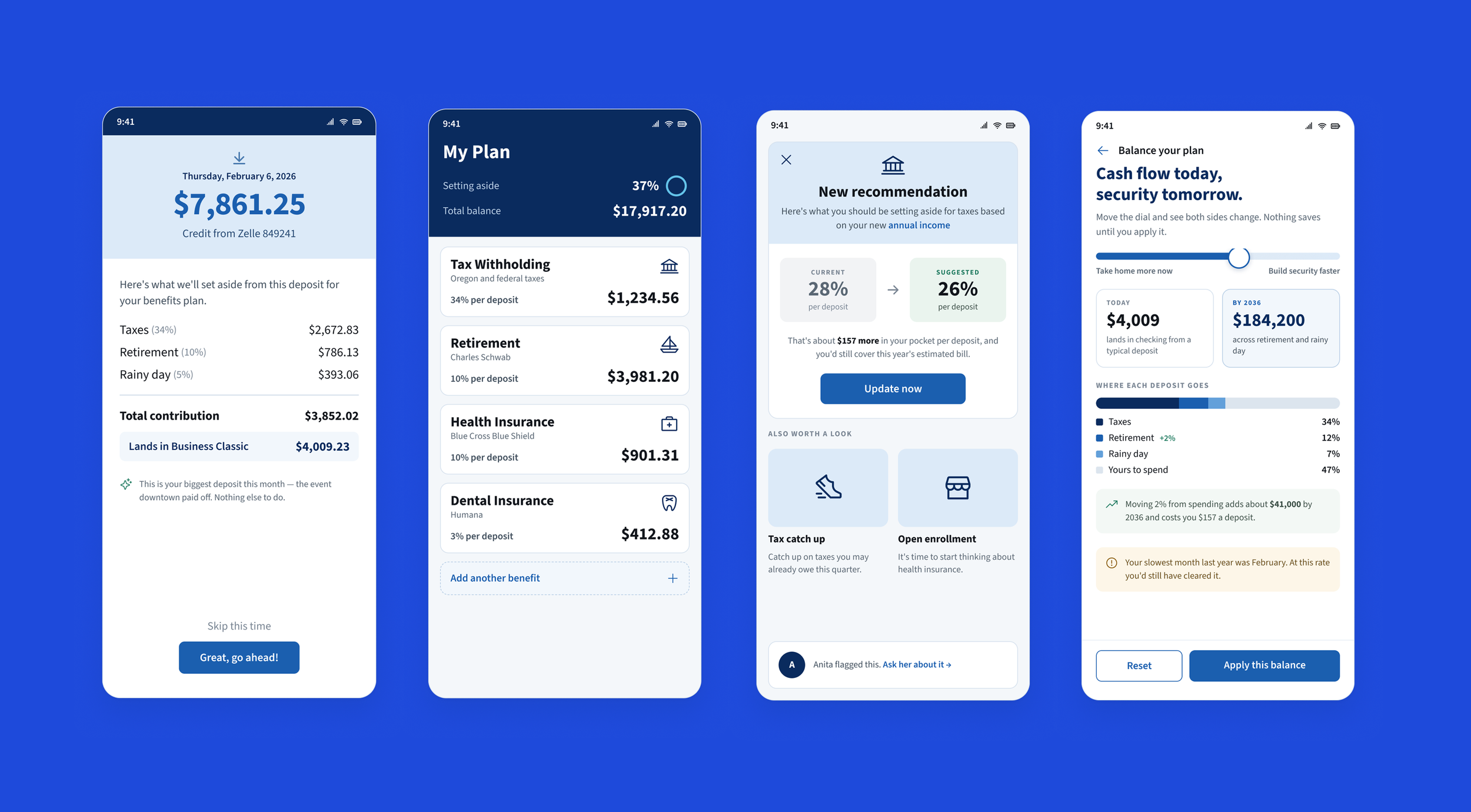
Instead of requiring owners to independently navigate disconnected products, Chase could help them establish and manage a personalized portfolio consisting of things such as: Tax withholding, Retirement, Rainy-day savings, Health insurance, and Dental insurance.
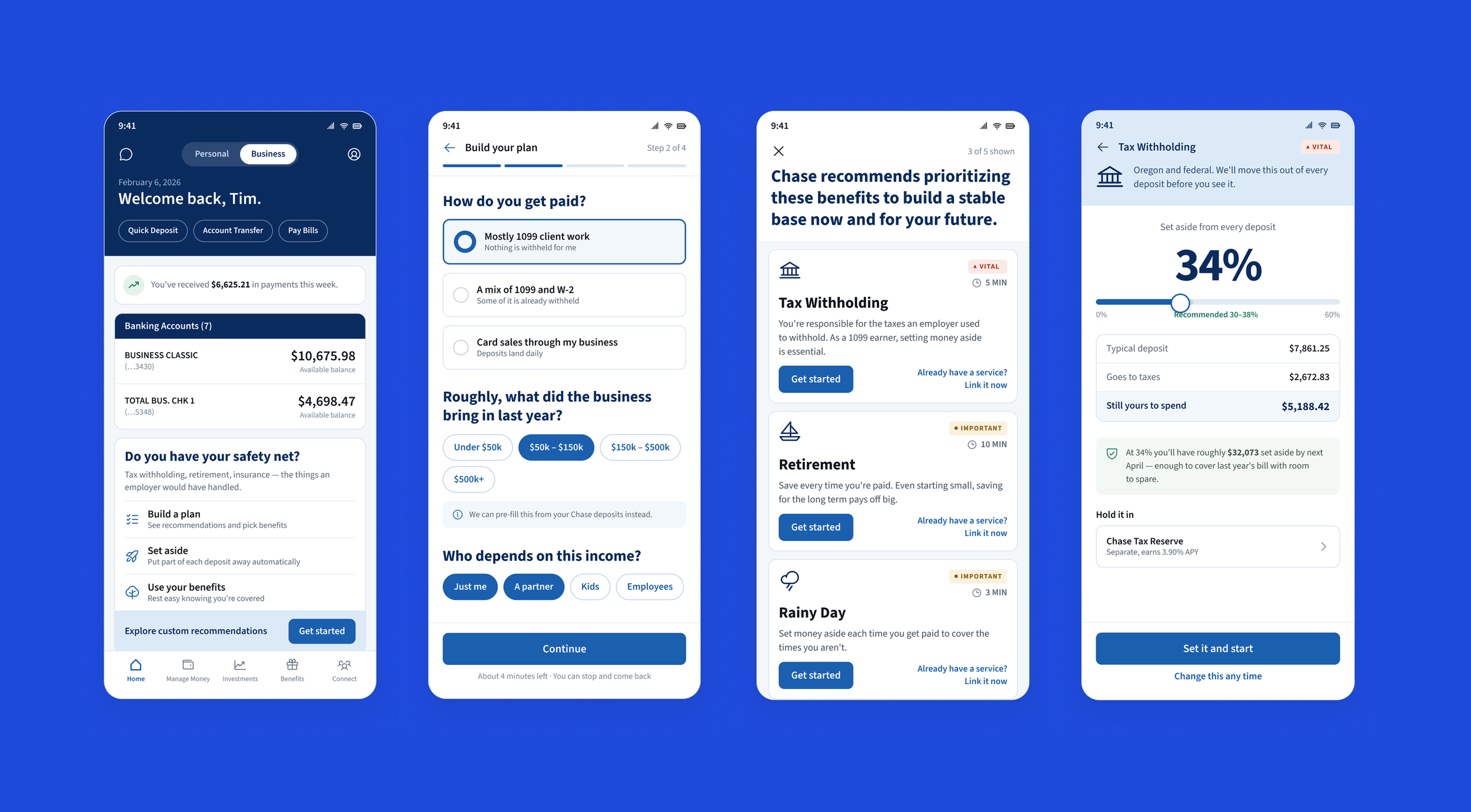
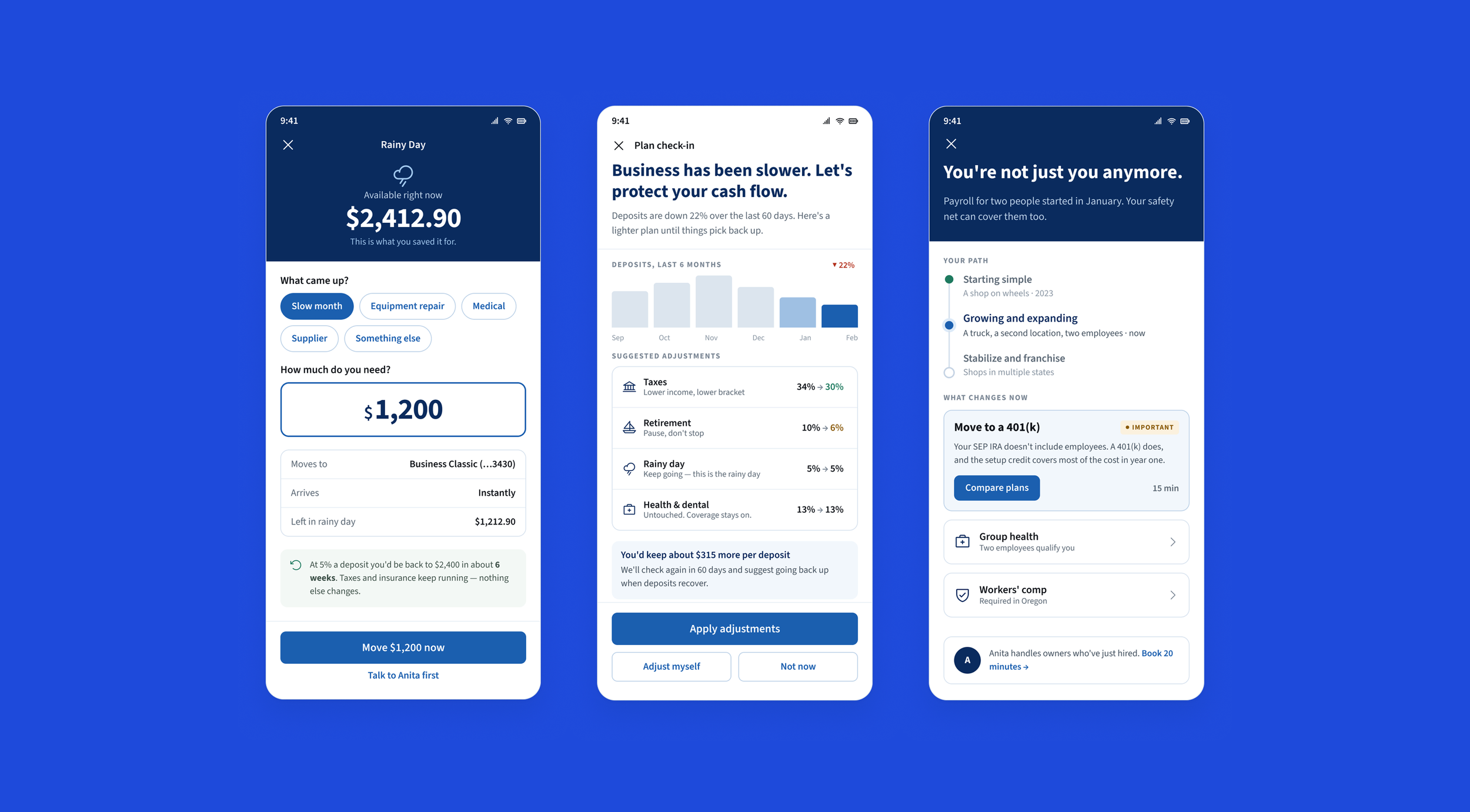
The experience allowed customers to understand what they needed, see how important each action was, understand how long it would take, allocate portions of income automatically, connect existing providers, and receive proactive recommendations as their financial situation changed.
Designing Around Trust
Research also gave us a clear set of principles for how Chase could credibly enter this space.
Customers wanted the experience to feel like Chase, integrate easily with other services, use human language, make decisions easy, enable immediate action, explain the importance of different choices, communicate the time required, and remain secure and consistent.
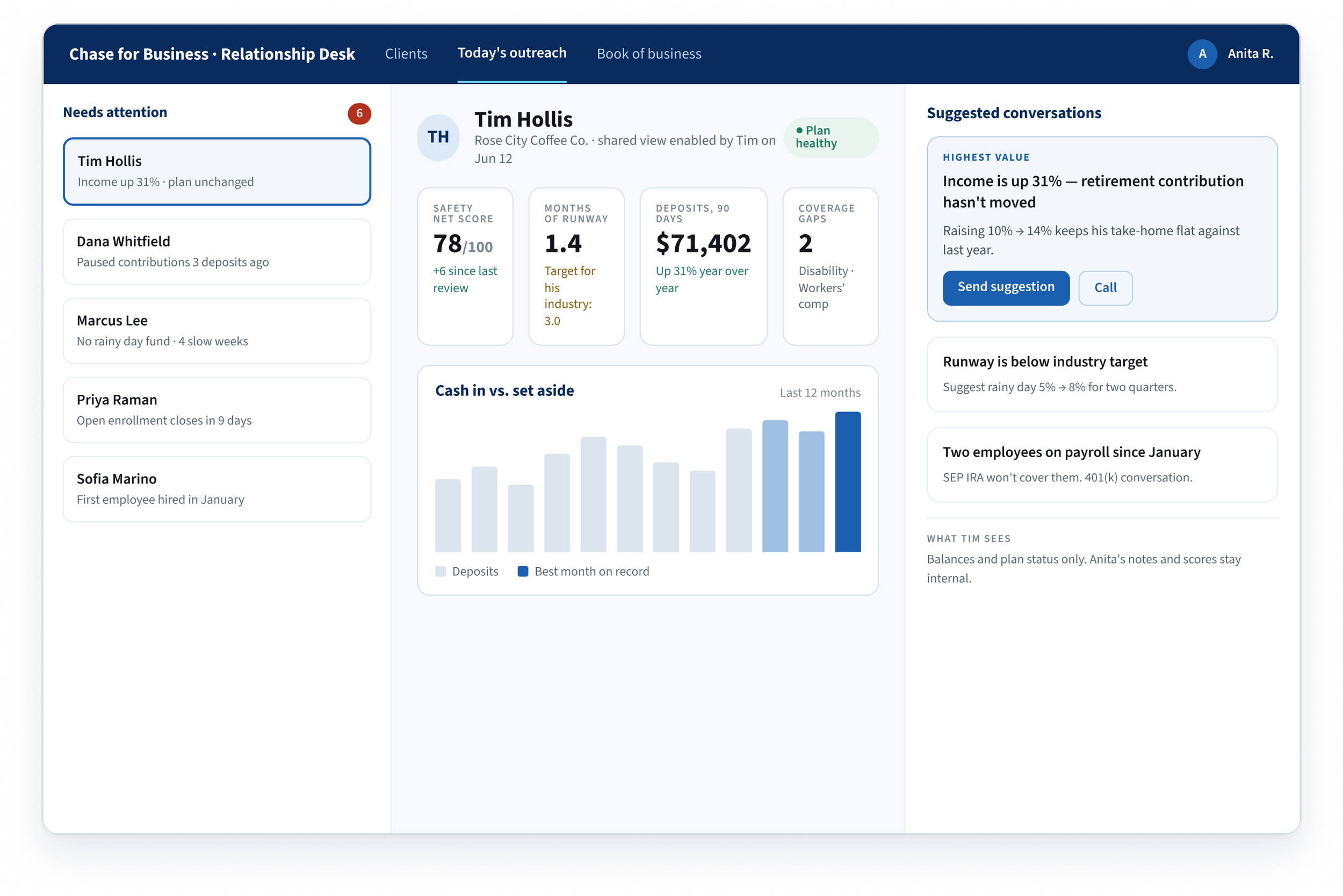
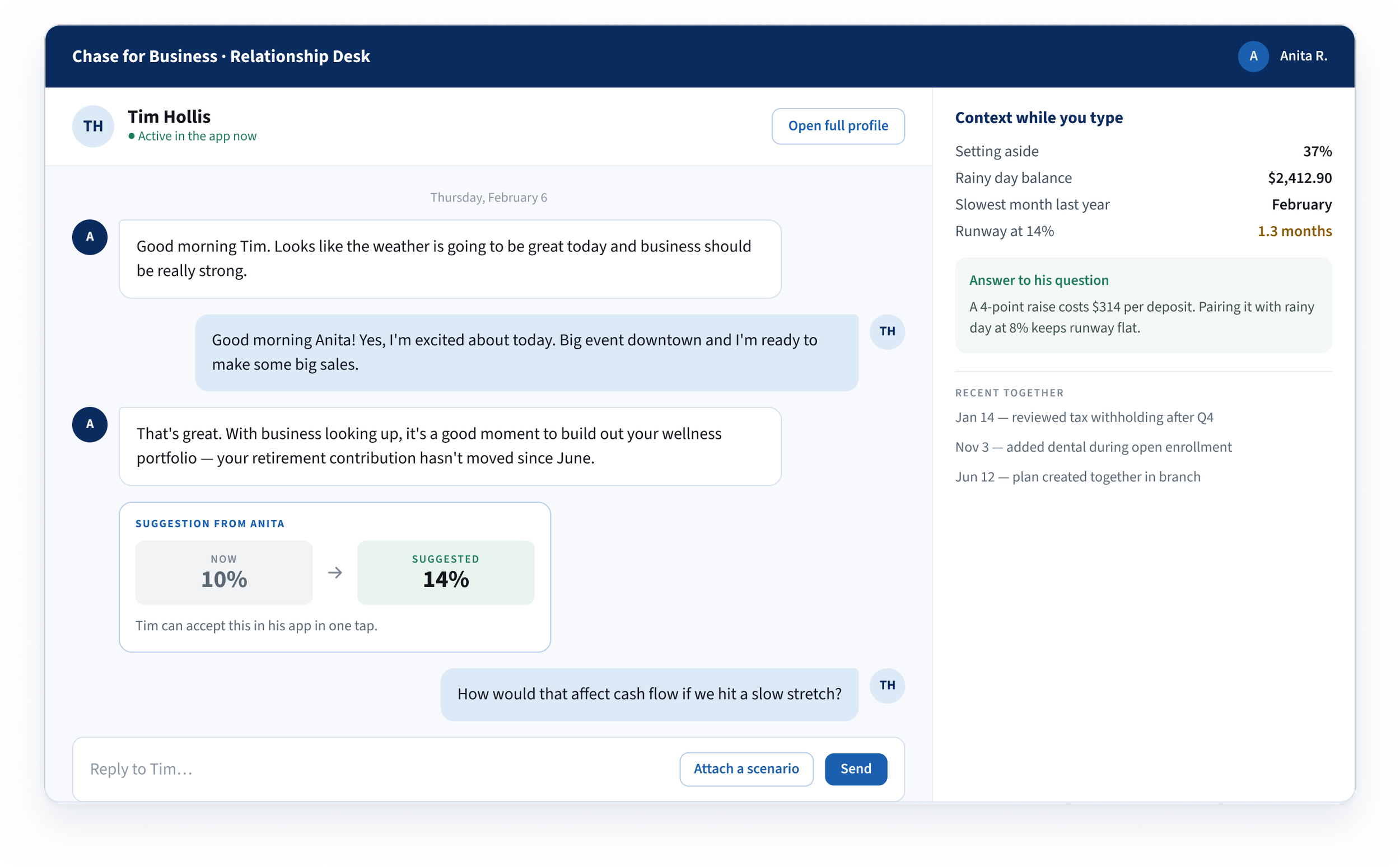
That led us toward a model where the digital experience didn't replace the existing banking relationship. It strengthened it.
The research indicated that more than 80% of these customers had a primary banking relationship and regularly relied on dialogue with their banker for guidance.
So we designed the ecosystem around both sides of that relationship.
The customer gained a single view of their financial health. The banker gained greater context to proactively help them make decisions.
Outcomes
The POC gave us something much more powerful than a presentation.
It gave leadership something they could react to, customers something they could validate, and the organization something it could measure.
We used the concept to test whether customers would accept Chase moving beyond traditional business banking into a broader financial-wellness relationship.
The idea of “bringing it all together” resonated strongly in initial testing, and the program advanced into a pilot involving 50,000 customers.
That validation allowed us to move the conversation from: “Should Chase be in this space?” to: “How large could this opportunity become?”
+18M
Potential incremental revenue
Driven by an estimated 15% increase in customer acquisition.
“Brian helped us see an opportunity beyond the products we were already offering. He connected a real unmet customer need to a broader business opportunity, brought the right teams together, and turned the idea into something we could test and prove. The work gave us a credible path to expand our relationship with small-business customers, reach new segments, and unlock meaningful new revenue potential for the business.”
— Jennifer Roberts, CEO, Business Banking, Chase
70%
Target customer adoption
Projected digital penetration across the existing customer base.
+10 pts
Customer satisfaction upside
Targeting an increase in CSAT from
72 to 82.
#1
Competitive ambition
A path to move Chase from #4 to #1 in the relevant Barlow small-business category.
The Bigger Transformation
The project demonstrated a different role for design inside Chase. We weren't simply improving an existing banking experience.
We were using customer insight to identify a whitespace opportunity, bringing multiple businesses together around it, creating a future-state proposition, and using a working POC to reduce the risk of a larger investment.
The result was a validated proposition for expanding Chase's relationship with small-business customers beyond transactions and into long-term financial security — beginning with retirement planning and expanding toward a broader financial safety net.
We didn't start with a product. We started with an unmet customer need, and proved there was a business behind solving it.