
Turning Three Products Into One Experience
Project Type: Enterprise Experience Transformation
Role: Design Executive and Strategy Lead
Deliverables: Experience Vision & Strategy, Multi-Product Architecture, Enterprise Design System, Brand Evolution, Organizational Alignment & Delivery
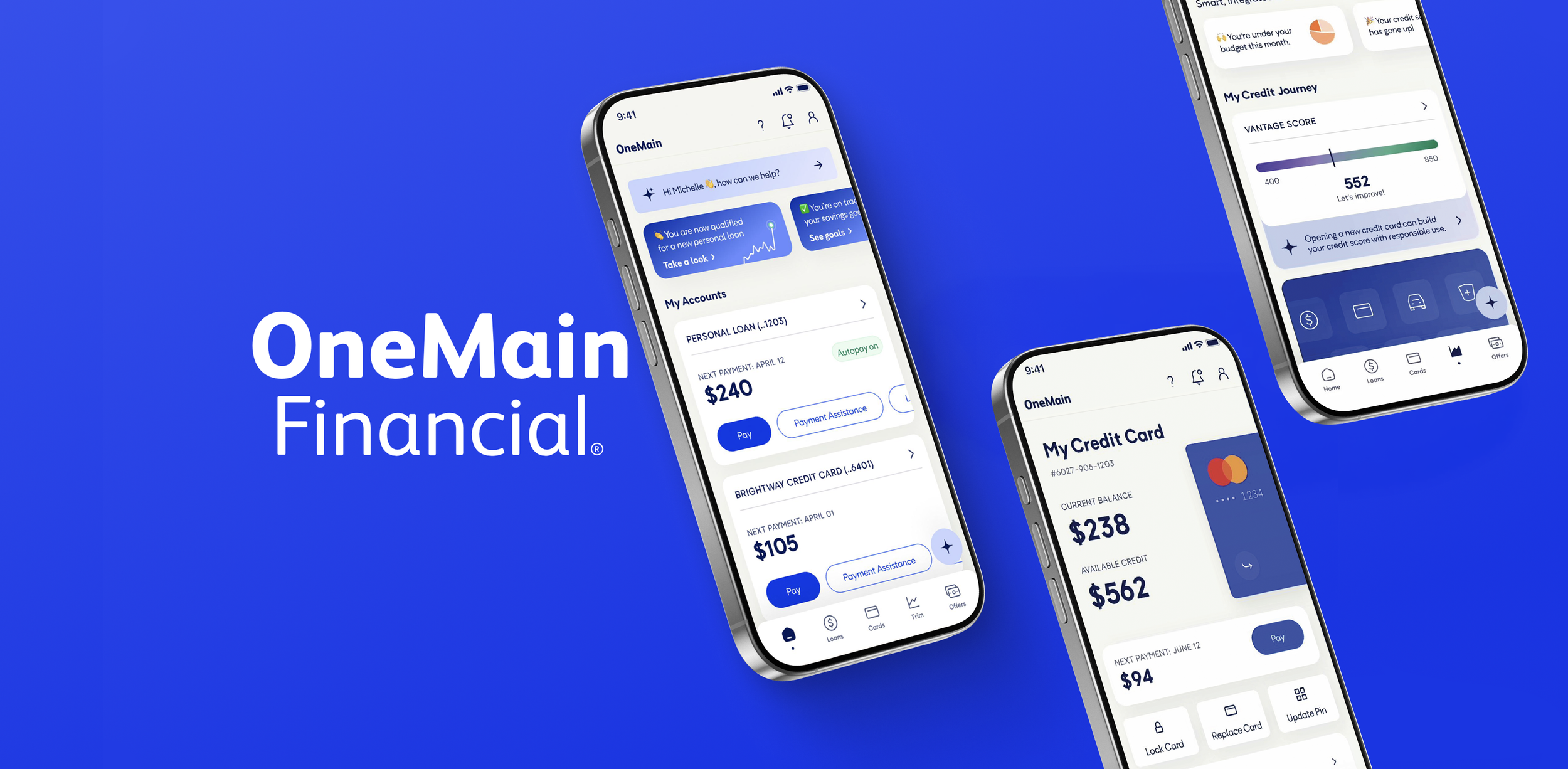
Introduction
OneMain had evolved from a single-product lending business into a broader financial ecosystem spanning personal loans, credit cards, financial wellness, insurance, and auto. But the customer experience hadn't evolved with it.
Products had been launched and acquired independently, creating multiple apps and websites with different design systems, communication strategies, payment experiences, identity models, and underlying platforms.
Customers increasingly had relationships with more than one OneMain product, but experienced them as separate businesses. The opportunity was bigger than redesigning an app.
We needed to turn a portfolio of products into one experience.
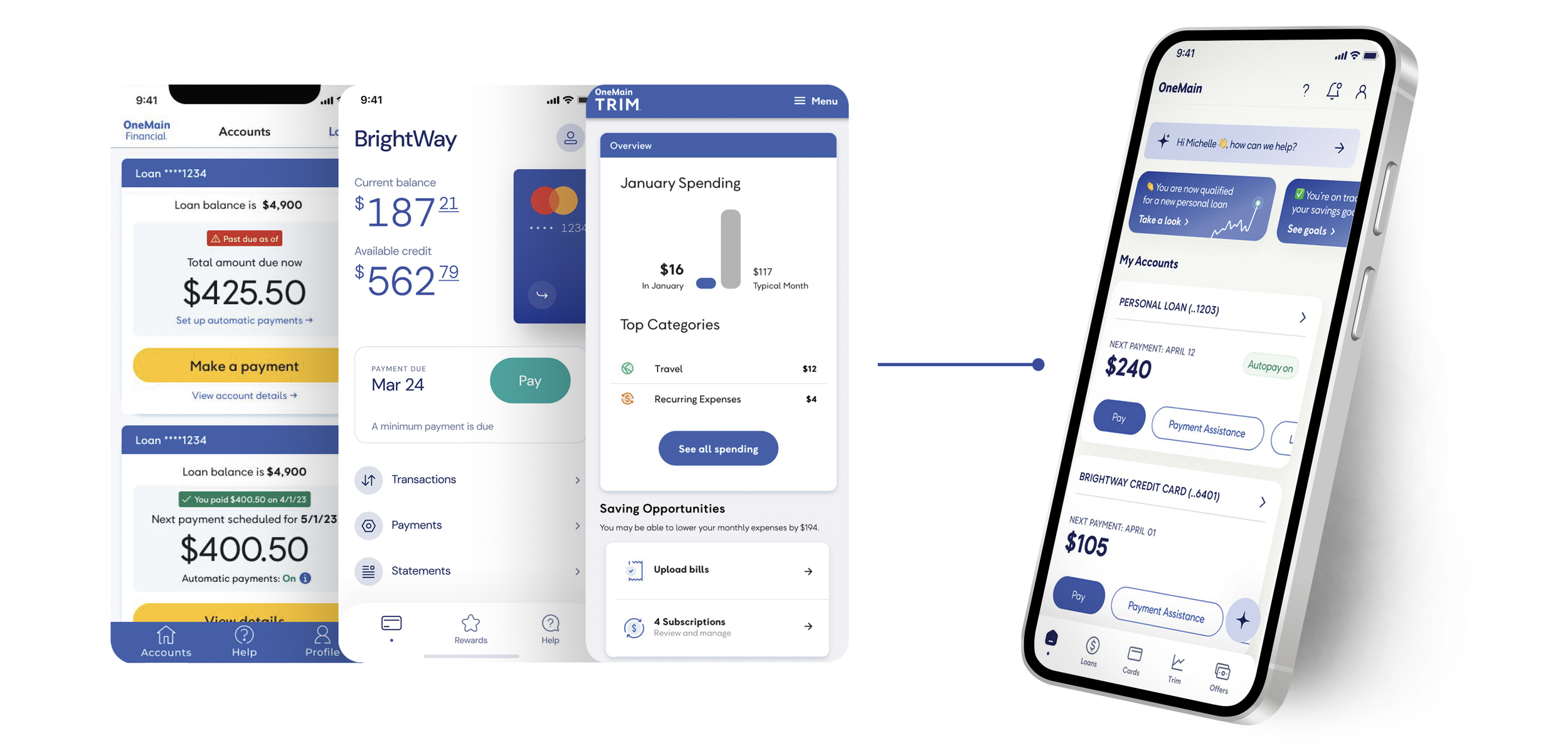
In less than a year, I helped architect and lead that transformation—bringing together two agency partners, our internal design organization, Product, Engineering, Brand, Marketing, individual lines of business, executive leadership, and the board around a common vision.
At the same time, we were evolving the brand, establishing a unified design system, redesigning core experiences, and creating an architecture capable of bringing five products together.
We weren't simply designing a new experience. We were designing how the organization would show up as one company.
Approach
I started by separating the problem we could see from the problem underneath it.
On the surface, we had inconsistent experiences. Underneath, we had independent product strategies, technology stacks, teams, brands, roadmaps, and operating models. Trying to solve those independently would have created another layer of fragmentation.
So instead of beginning with screens, we began with the relationship we wanted customers to have with OneMain.
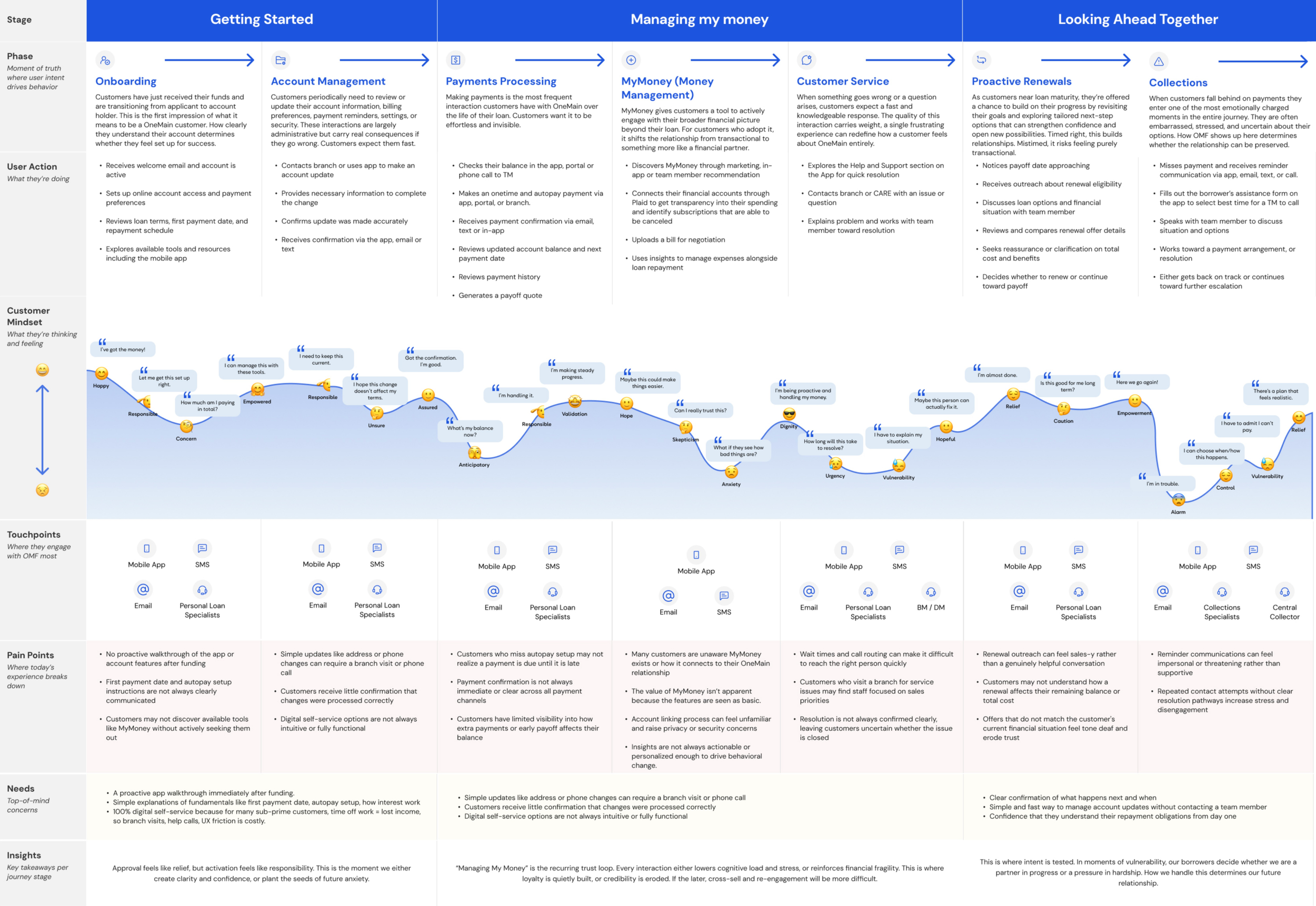
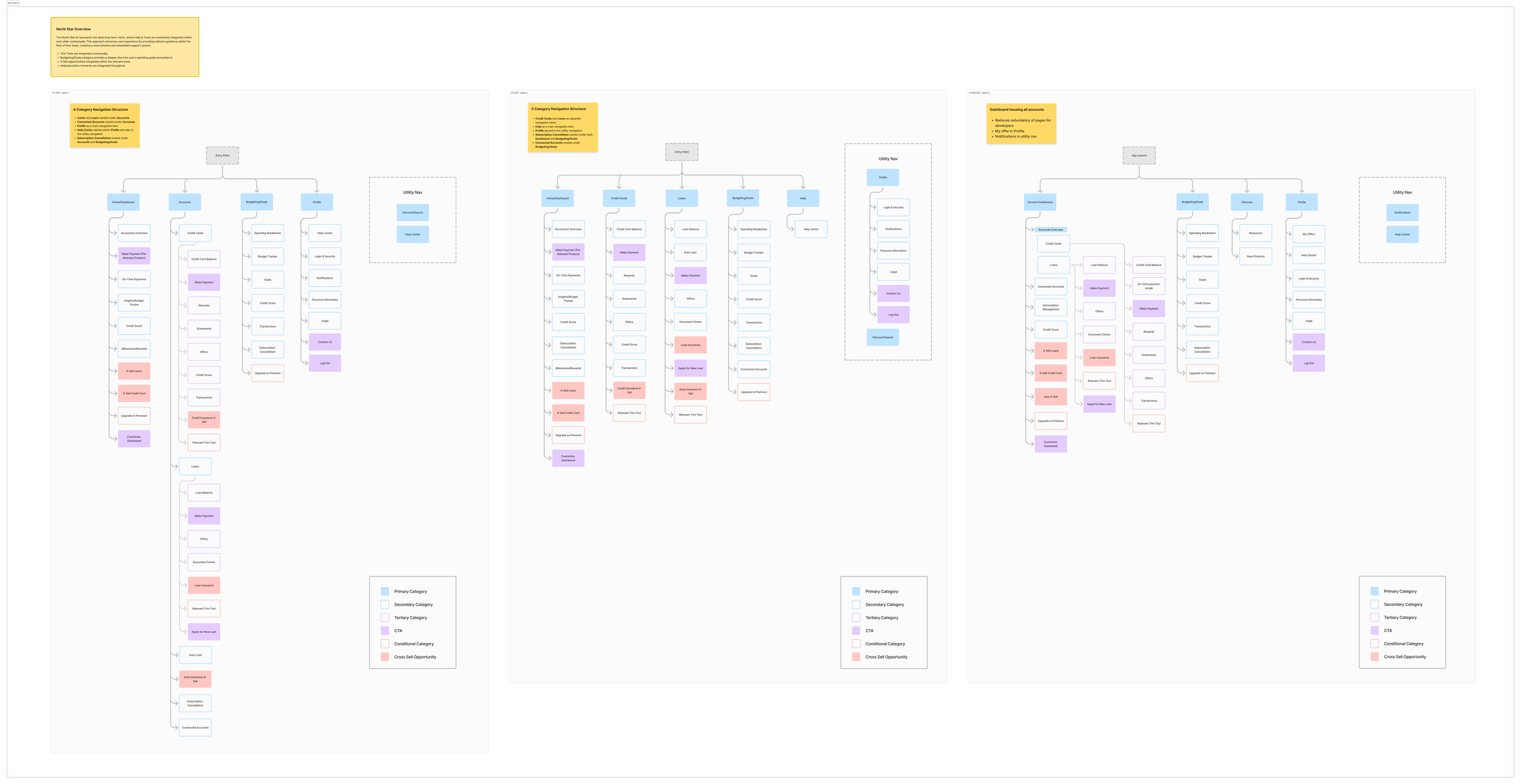
The strategic ambition was to create a single digital ecosystem where customers could understand and service their existing products, improve their financial position, discover relevant new products, and eventually move between those experiences without leaving OneMain.
That changed the question we were asking: What if customers didn't have to understand how OneMain was organized in order to use OneMain?
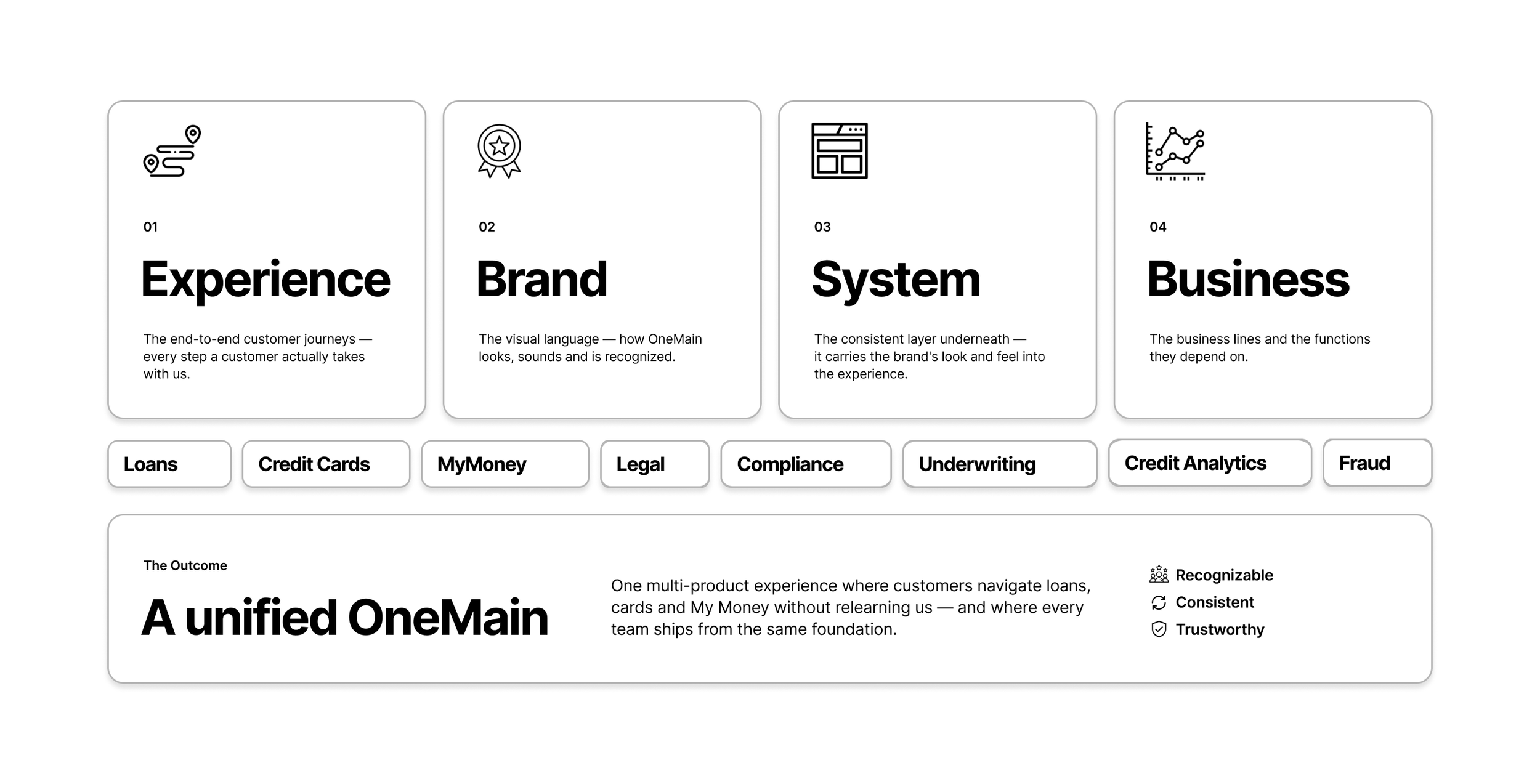
The work became a coordinated transformation across four interconnected layers: Experience. Brand. System. Organization. Each needed to move together.

A combined mobile NPS of just 16 contributed to approximately $260M in annual business losses.
The Strategy
The easiest answer would have been to put three products inside the same navigation. That wasn't the experience we wanted to create. We needed a model capable of understanding the customer's entire relationship with OneMain—and dynamically helping them manage what they had, understand what was happening, and determine what might be useful next.
That led us toward a shared experience architecture.

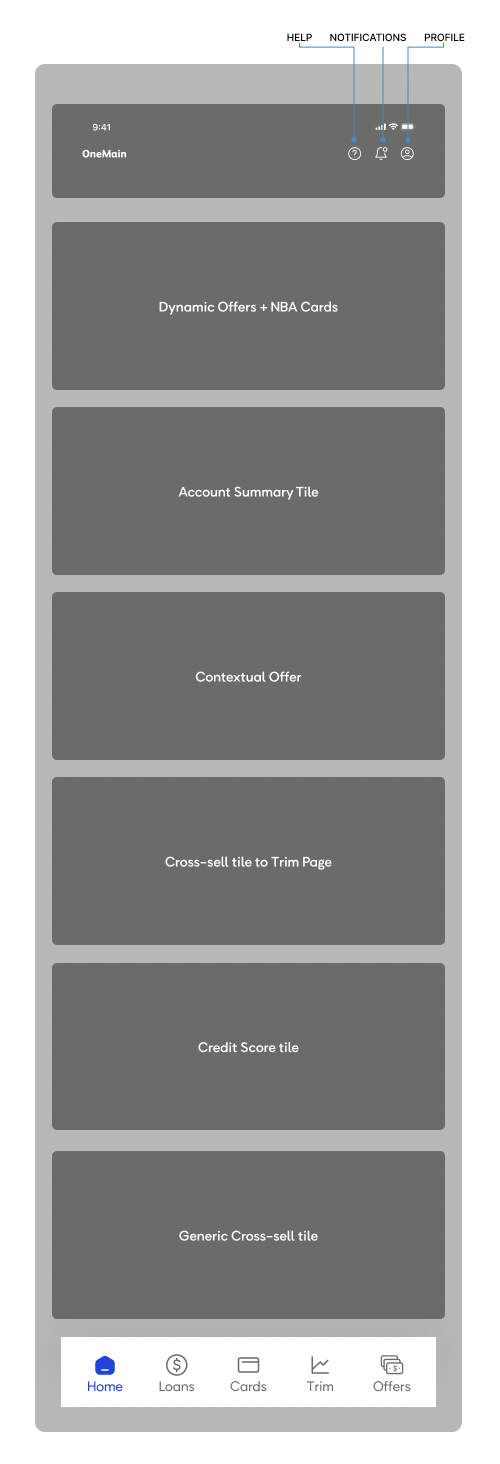
A unified dashboard became the connective layer across products. Common navigation created a predictable way to move between them. Shared patterns brought consistency to payments, progress, support, messaging, profile management, and servicing.
Financial wellness created value beyond individual transactions.
And contextual content and offers created the foundation for a more personalized relationship over time.
The goal wasn't to make every product identical.It was to make every product feel like part of the same relationship.
One customer. One ecosystem. Multiple products.
Creating the North Star
Before multiple teams could build toward the same future, they needed to see it. Working across our internal team and agency partners, I helped translate the strategy into a tangible North Star experience. We explored what OneMain could become if Loans, BrightWay, Trim, servicing, financial wellness, offers, and support existed within one coherent ecosystem.
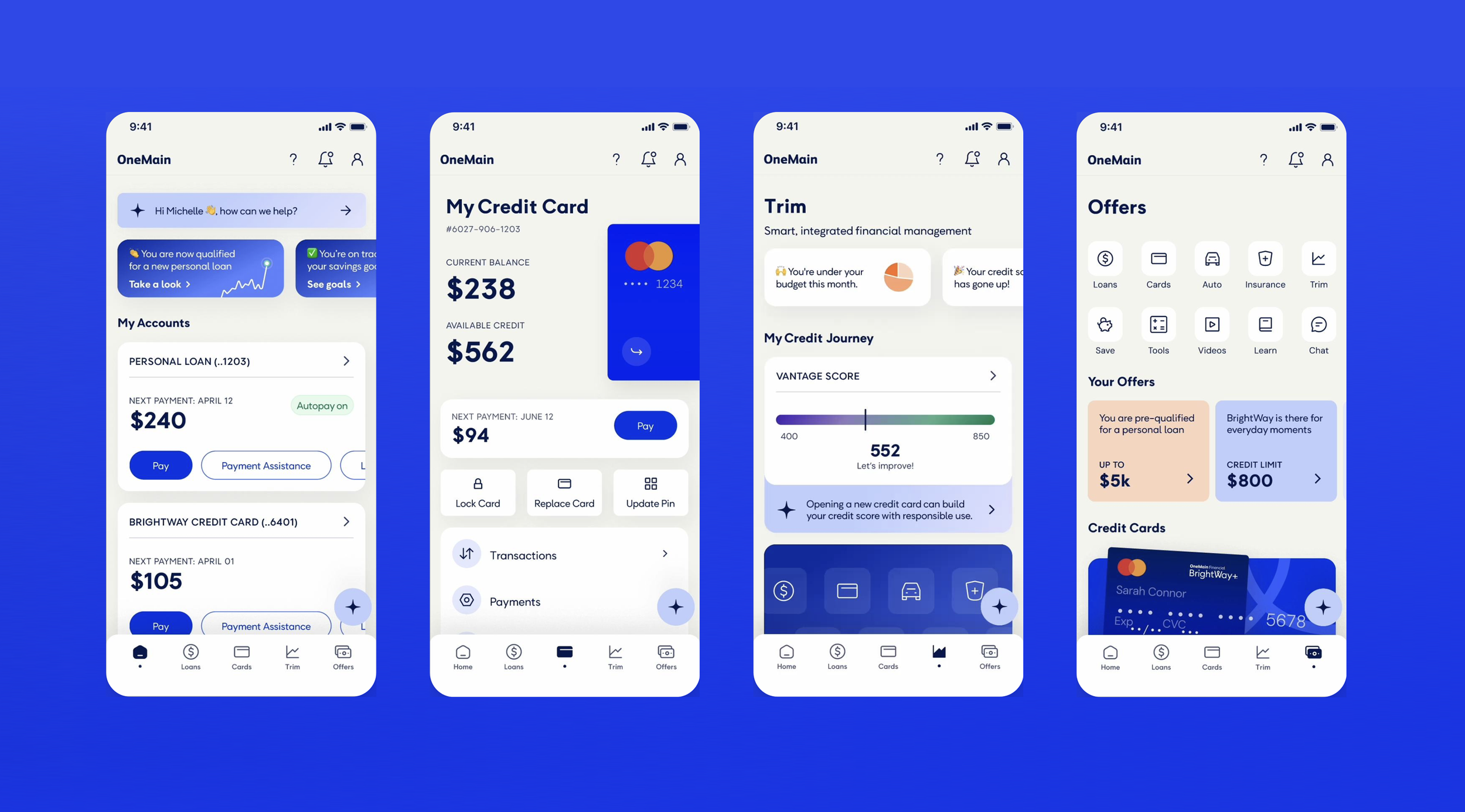
The dashboard supported multiple products and dynamic hierarchy while introducing contextual assistance, personalized insights, targeted offers, and progress tracking.
Individual products could then go deeper without requiring customers to learn a completely different experience each time.
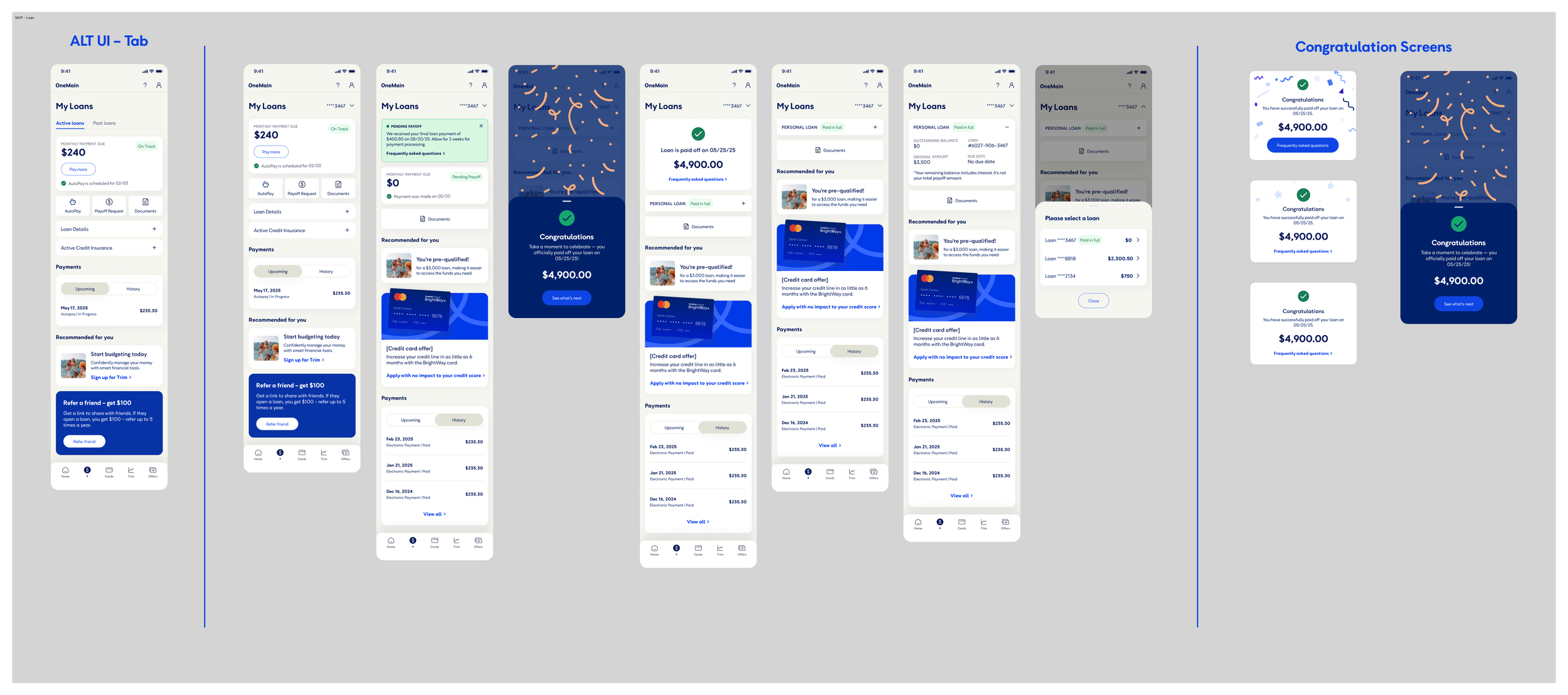
Loans introduced modular servicing, progress tracking, and payment management.
BrightWay retained the familiarity and positive reinforcement that differentiated the card while adopting the shared experience language.
Trim extended the relationship into contextual financial insights and proactive guidance.
Marketplace created a destination for relevant products, benefits, education, and personalized offers.
For the first time, teams could see their individual products as part of something larger. The North Star gave the organization something concrete to align around.
Evolving the Brand With the Product
The experience architecture was changing faster than the enterprise brand had been designed to support. OneMain now needed to represent a portfolio—not just a lending product. Rather than introducing another visual language, I helped lead an evolution of the existing brand alongside our agency partner.
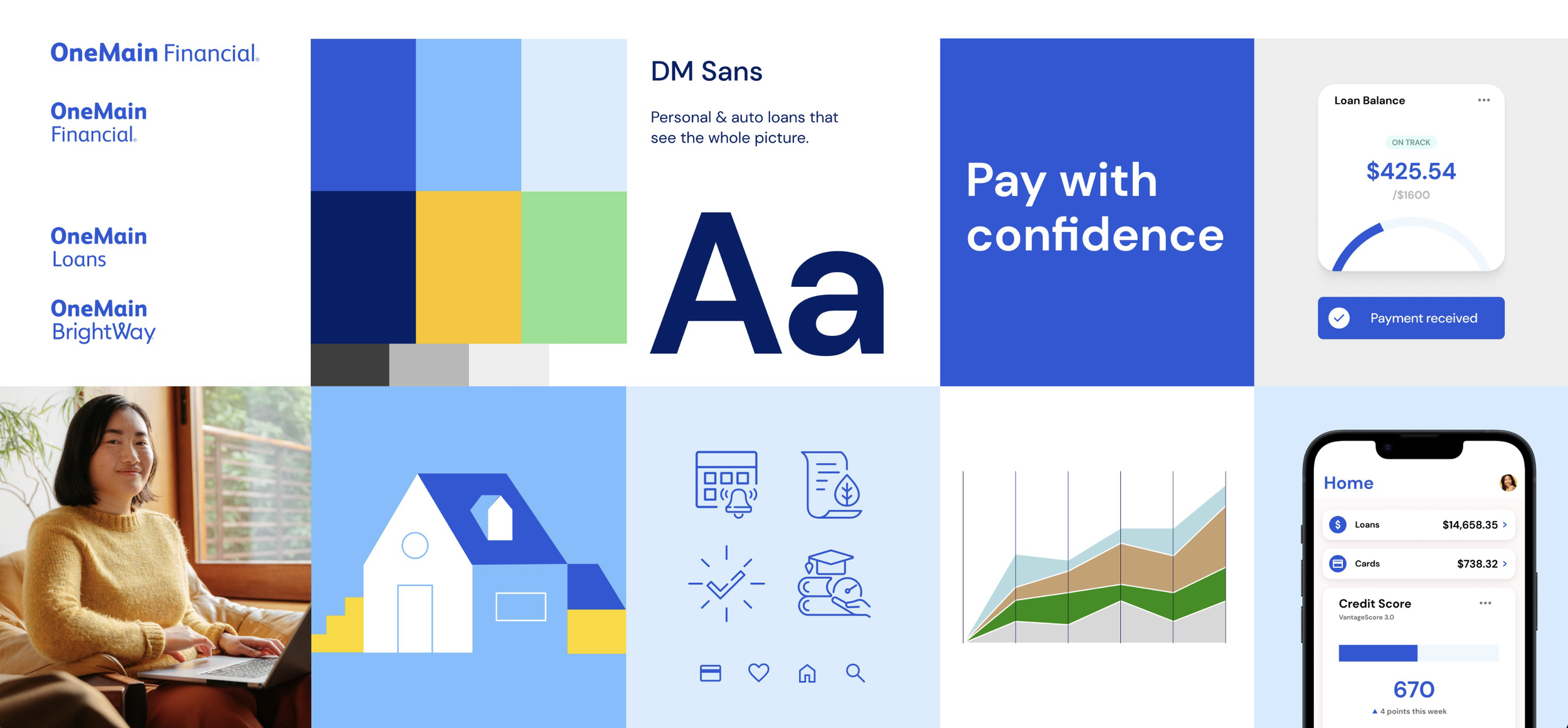
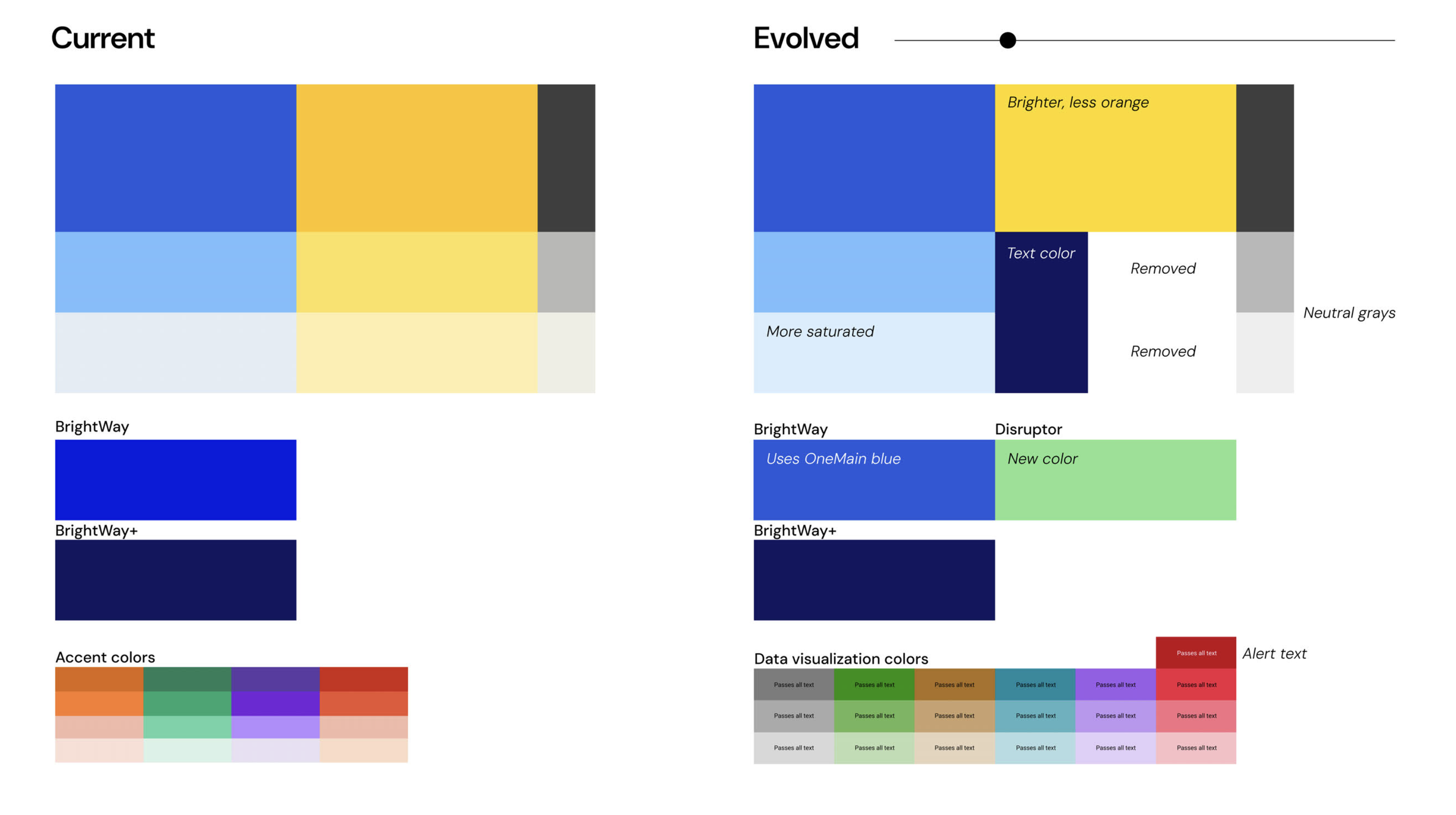
We deliberately preserved recognizable equity while expanding what the system could do: retaining core colors and typography, extending the supporting palette, evolving the journey-line graphic, simplifying iconography, refining illustration, and creating visual behaviors that could stretch across products.
This gave us another important principle: Consistency didn't have to mean sameness.
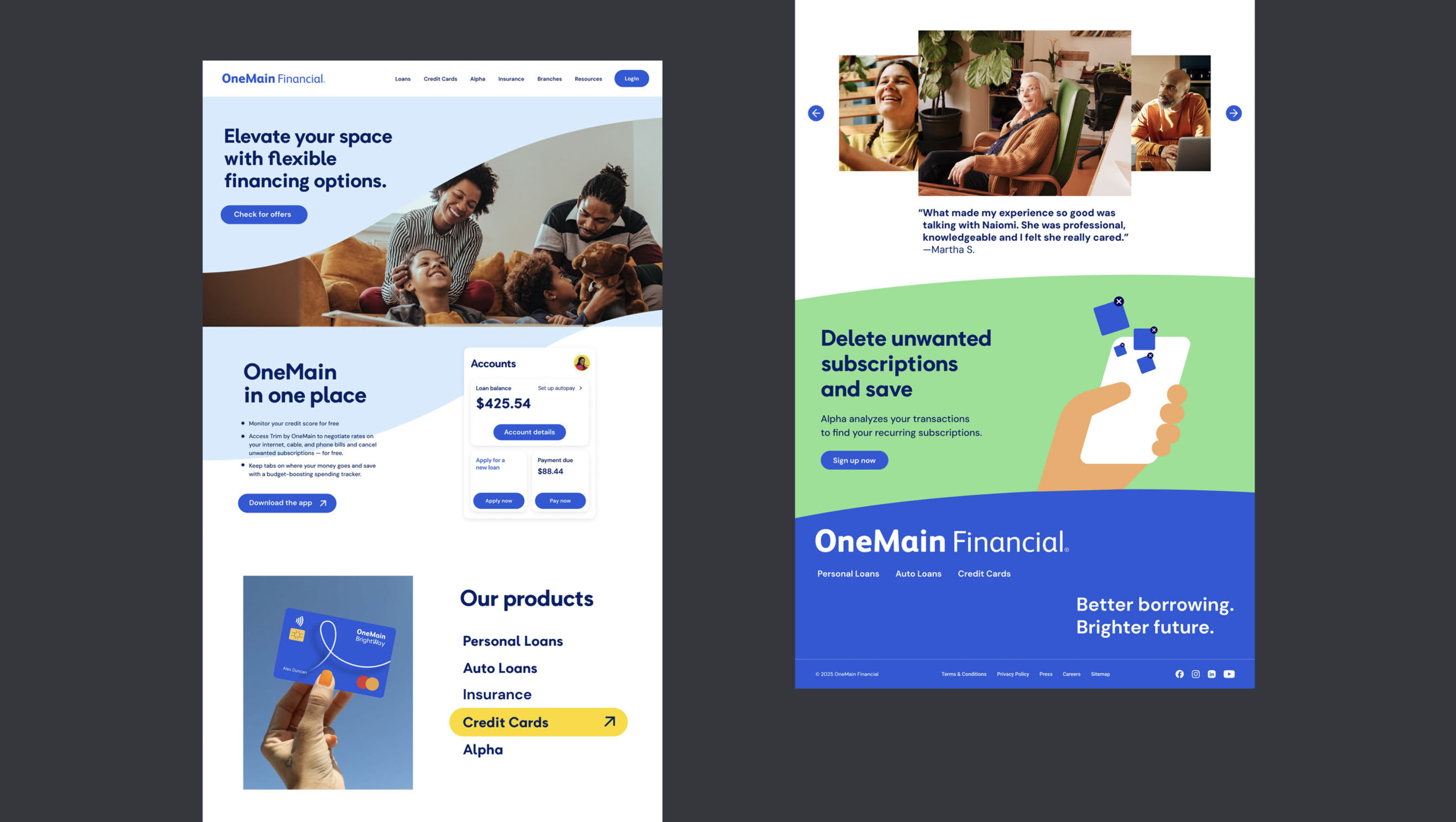
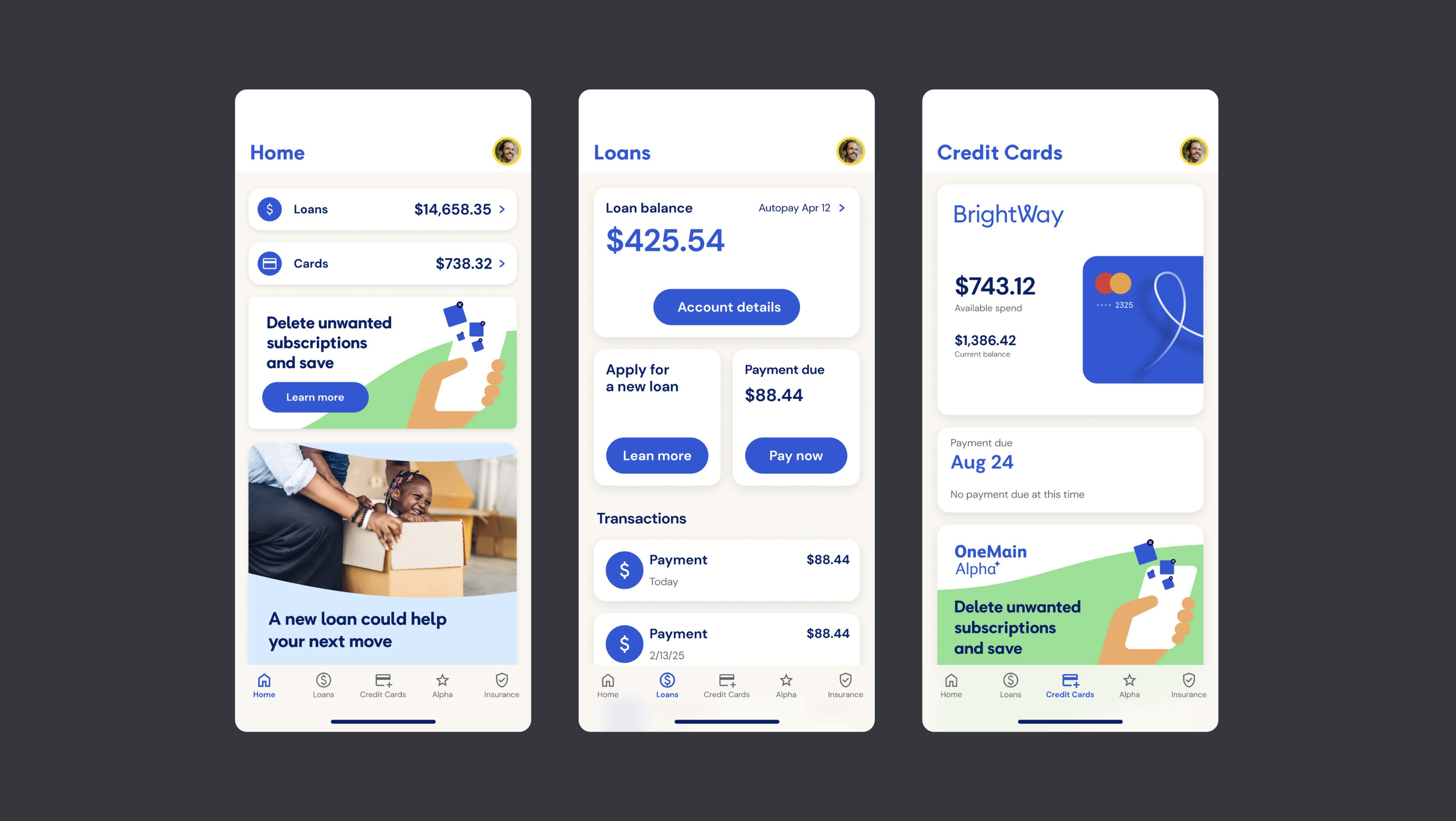
BrightWay could remain distinctive. Financial wellness could feel different from servicing. Individual products could express their purpose. But everything needed to unmistakably belong to OneMain.
Brand and product were no longer separate systems. They became one experience language.
Building the System Behind the Experience
Creating a unified concept was one thing.Scaling it across independent teams was another.
If every product team interpreted the North Star independently, we would eventually recreate the fragmentation we were trying to eliminate. So in parallel with the product work, I led the creation of a shared experience and design-system foundation.
We established common principles for navigation, hierarchy, typography, color, components, cards, payments, alerts, status, progress, actions, and product templates. The goal wasn't centralized control. It was distributed consistency.
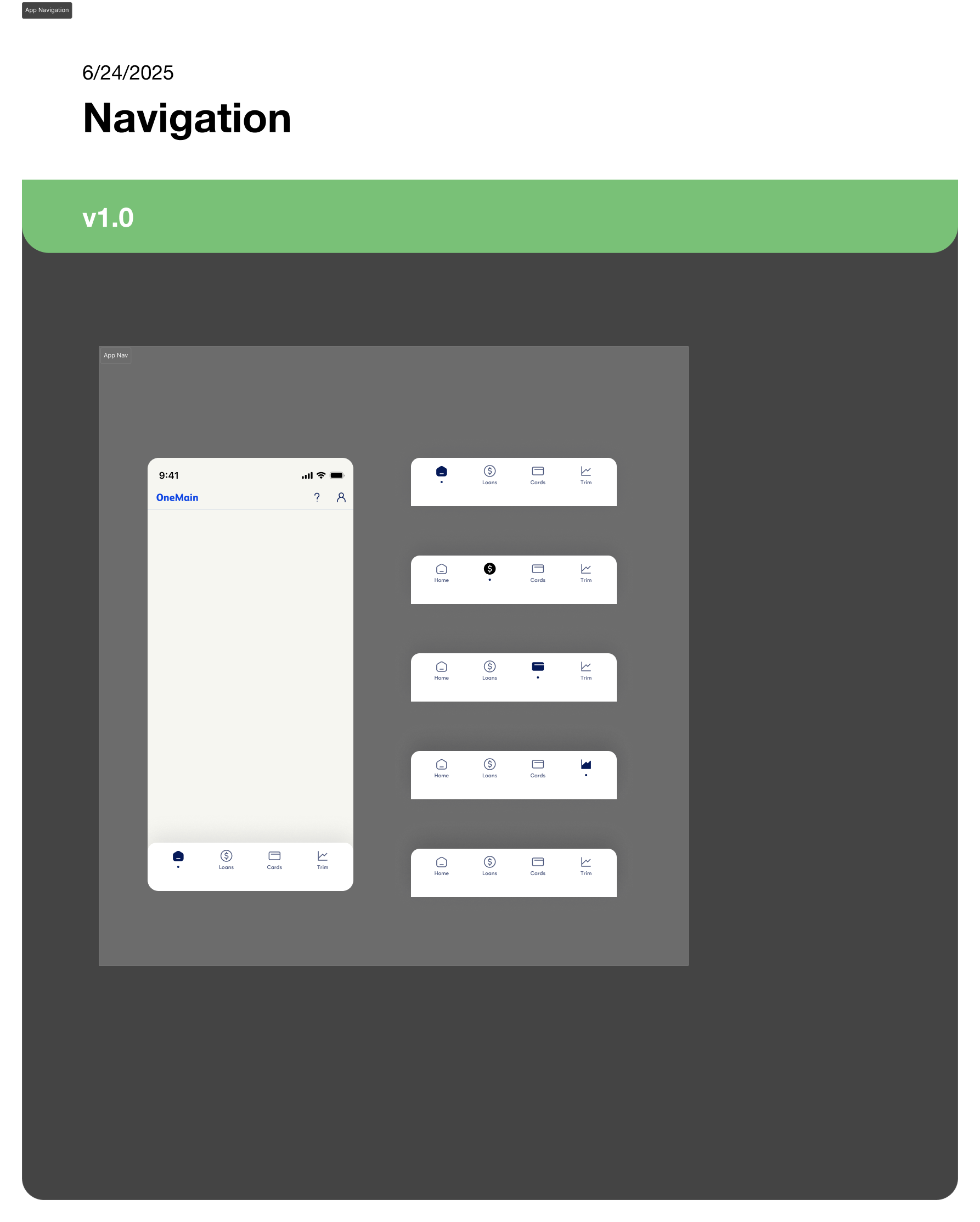
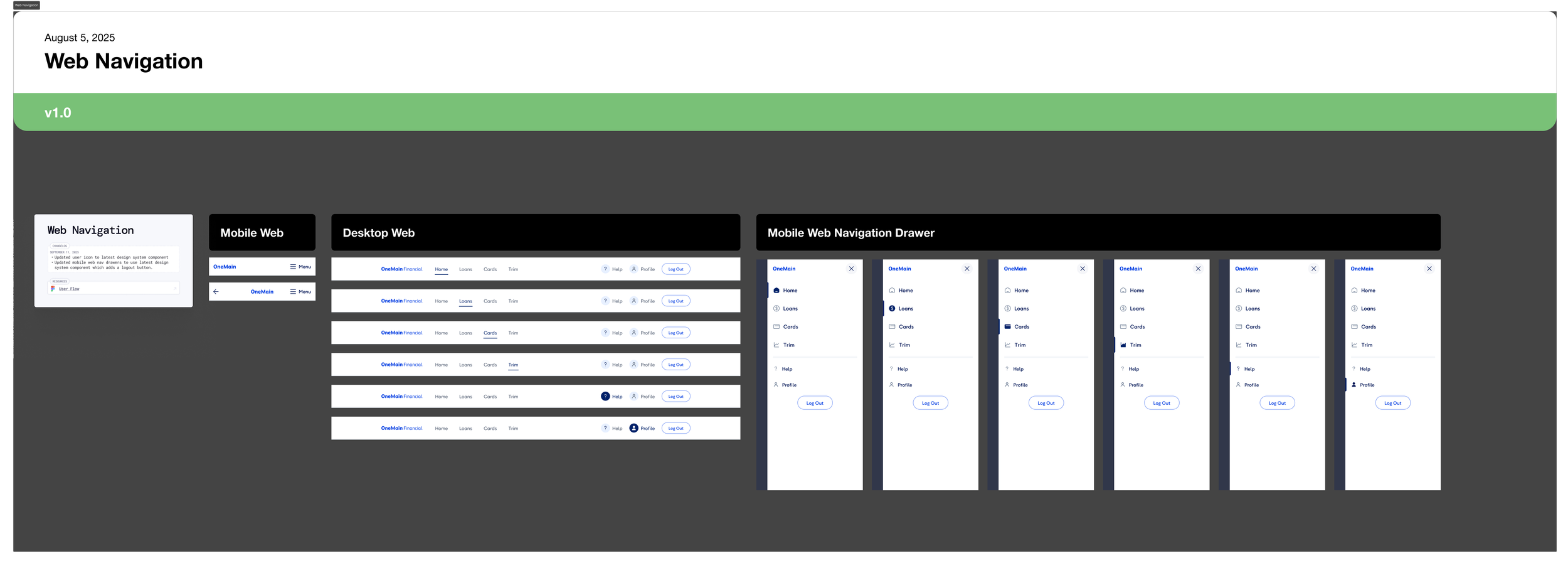
Individual product teams could continue developing and managing their experiences while operating within shared UX principles and reusable patterns. That model was intentionally part of the broader platform strategy.
Instead of requiring one team to design everything: We designed a system that allowed many teams to build one experience.
Leading the Work Differently
The complexity wasn't just in the product. It was in the organization required to deliver it.
I was aligning internal design, two agency partners, Product, Engineering, Brand, LOB leaders, executives, and the board—each with different priorities.
Product needed velocity. Engineering needed feasibility. LOBs needed confidence. Brand needed coherence. Executives needed a credible path to delivery.
My role was to connect those perspectives without allowing the customer experience to become the compromise between them.
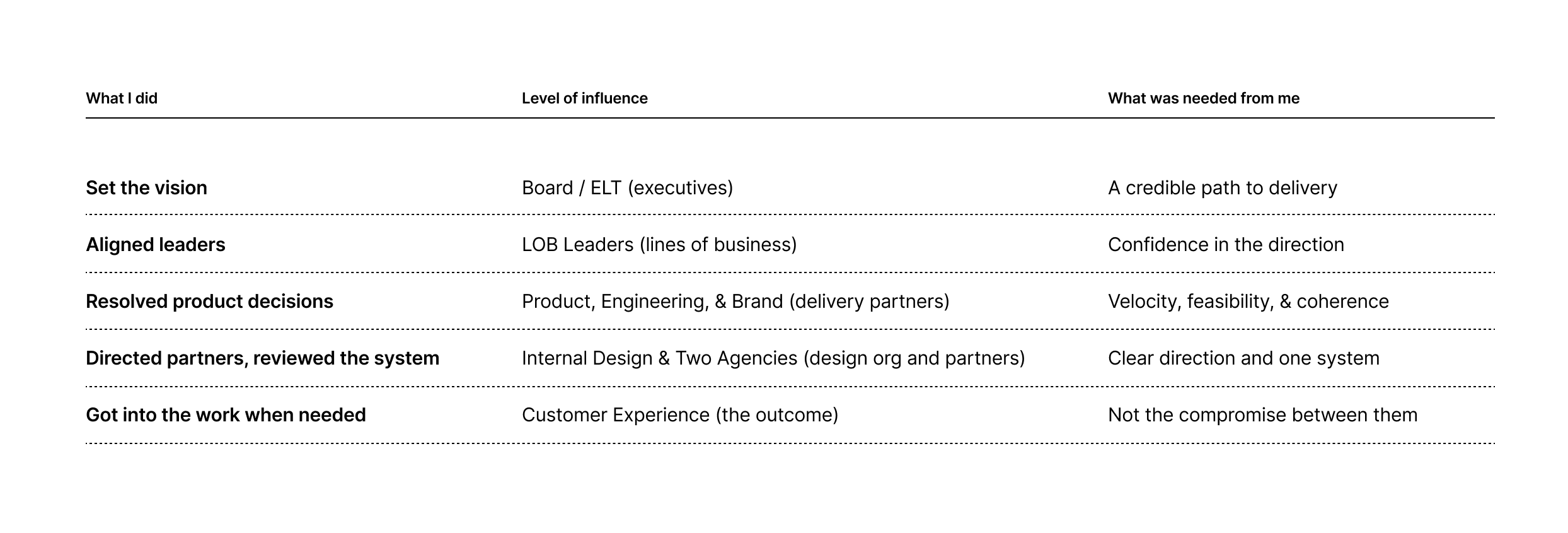
That meant moving fluidly between levels of the work—setting the vision, aligning leaders, directing partners, resolving product decisions, reviewing the system, and getting into the work when needed.
I didn't lead the transformation from the sidelines.
When the work needed alignment, I led the organization. When it needed momentum, I stepped into the work.
Moving Before Everything Was Ready
A unified technology platform couldn't be built overnight.Waiting for it would have meant waiting to improve the customer experience. So we deliberately separated the North Star from the sequence required to reach it.
The roadmap moved through three stages: Multi-product UX, Centralized Servicing, & One Platform
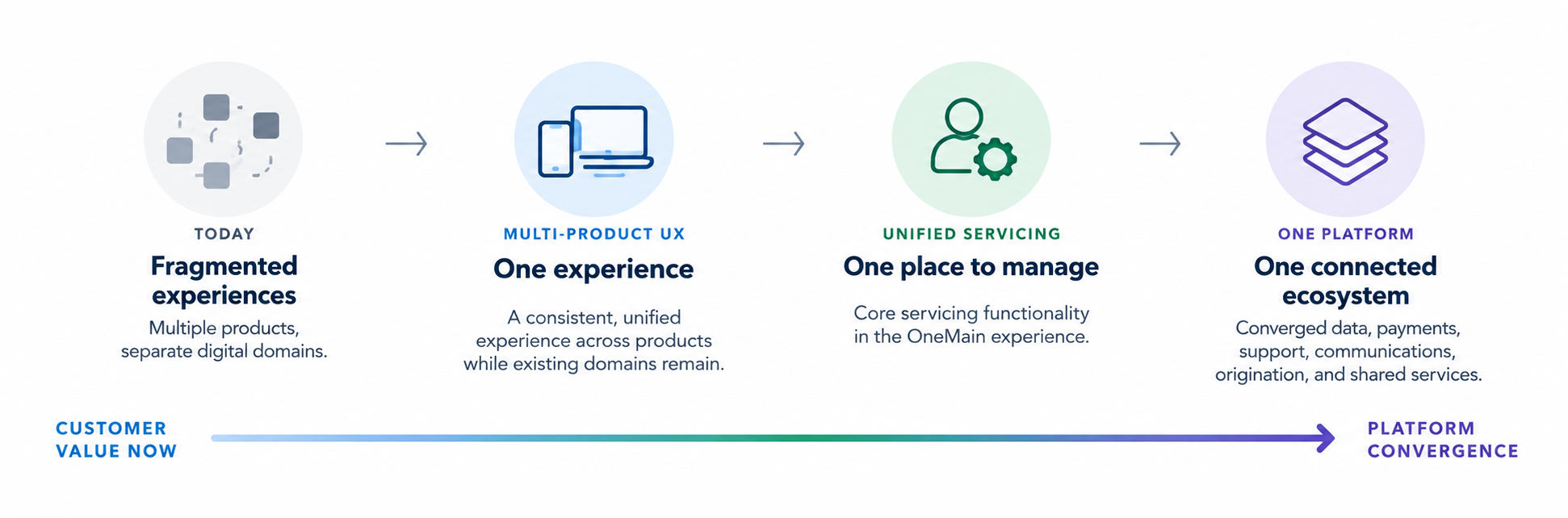
The first phase brought products into a shared experience while existing digital domains remained in place.
The second moved core servicing functionality into the OneMain experience.
The third envisioned the deeper convergence of customer data, payments, support, communications, origination, and other shared services required for a true unified platform.
That allowed us to front-load customer value while the organization worked through deeper technology dependencies. We didn't wait for the enterprise to become unified before creating a unified experience. We used the experience to show the enterprise what it needed to become.
Outcomes
The most meaningful outcome wasn't a single screen. It was the foundation we created across the organization and for the customer experience.
3 to 1
Products brought into one experience
Loans, Cards, and Trim organized around a shared ecosystem.
“Brian gave the organization more than a design vision—he gave us a path forward. He brought independent teams around one strategy and helped us see how a collection of products could become one connected business.”
— Jeanette Osterhout, Chief Strategy Officer and CFO, OneMain Financial
1
Modeled increase in throughput
More initiatives delivered with
existing capacity
1
Enterprise design language
A shared system connecting brand, product, components, patterns, and individual product experiences.
+86%
Digital engagement increased
Within the first month of launch, contributing to approximately $30M in new money growth.
The Bigger Transformation
I started the work thinking about how we could bring multiple products into one experience. But the larger challenge was bringing the organization behind those products together.
The design system gave teams a common language, the North Star a common destination, the brand a shared identity, and the experience architecture a way for independent teams to contribute to something larger. That reinforced something I believe about leadership at this scale: the role isn't to own every decision—it's to connect the decisions that matter.
I moved between strategy, storytelling, organizational alignment, agency leadership, system design, and product execution—operating at 30,000 feet when the organization needed direction and at 30 feet when the work needed momentum.
I helped architect the vision, align the organization around it, and build the system that allowed many teams to move toward it together.