
project color™
Project Type: Product
Role: Creative and Strategic Direction
Deliverables: Vision & Strategy, UX Research, E-commerce Design, Brand
Introduction
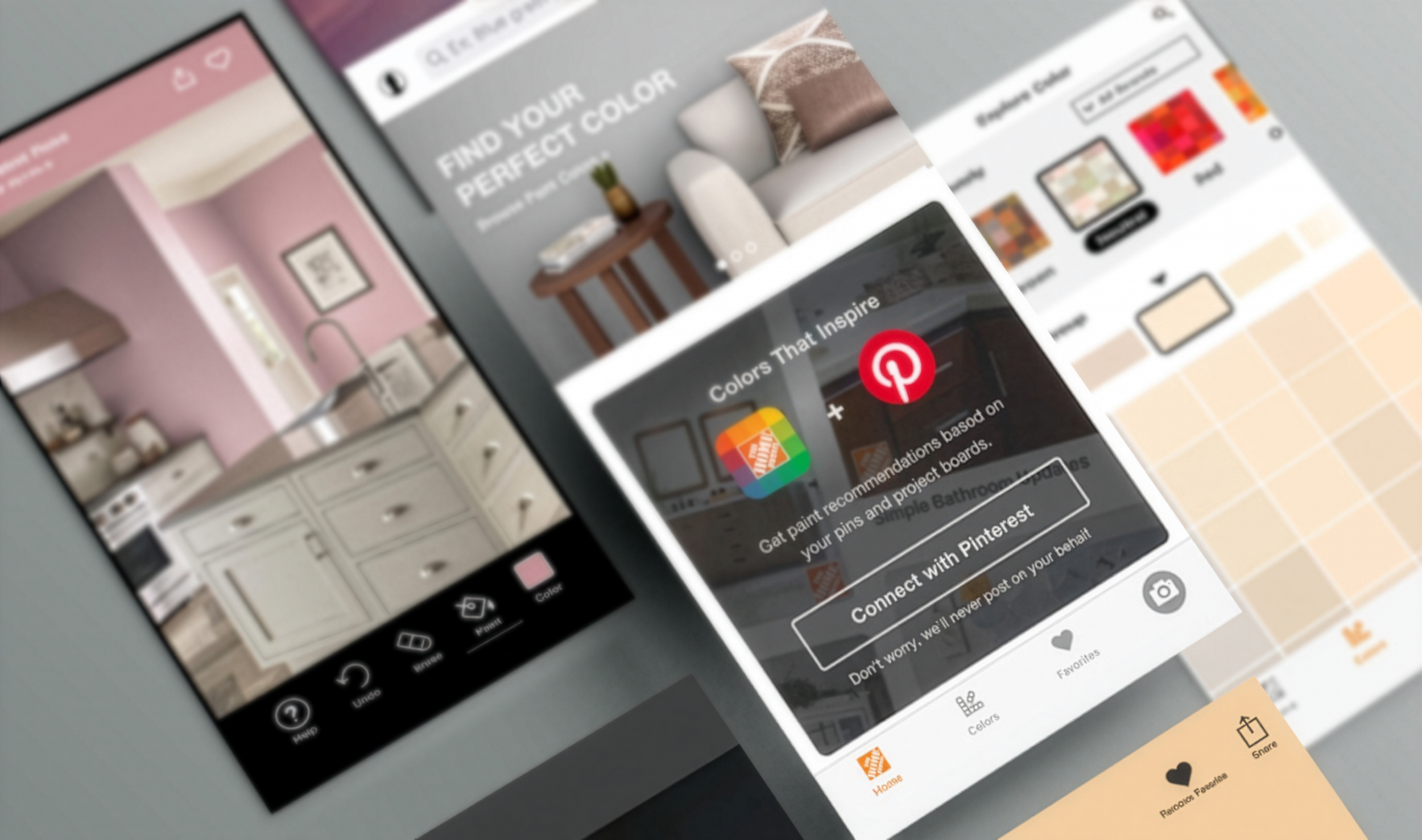
The key to a well-designed space often lies in the color that covers the walls. Paint can completely transform a room or serve as the subtle element that ties a style together. However, many homeowners struggle to choose the right shade. In fact, nearly 75% of customers abandon a paint project because they can’t make a color decision — a challenge that was costing Home Depot an estimated $1B in lost revenue annually.

+75% of customers give up on painting because they can’t pick a color.
Home Depot was also facing a unique challenge: customers typically needed three trips to the store before completing a paint purchase. This created additional strain on store associates, who had to manage repeated questions and visits, and it contributed to a decline in online sales.
Approach
To address the challenge, Home Depot issued an RFP to established agencies like R/GA, AKQA, Sapient, and IDEO. Although Salesforce wasn’t initially seen as a contender, I influenced our leadership to enter the competition. Our advantage was clear: a powerful, integrated technology stack and unmatched data connectivity. I secured $200K in seed funding and assembled a cross-functional tiger team to rapidly develop our approach.

We began by aligning on the customer and mapping the holistic journey. Home Depot supports multiple customer profiles, each with different needs and behaviors, so we expanded our research to adjacent experiences to ensure our understanding was both accurate and complete.
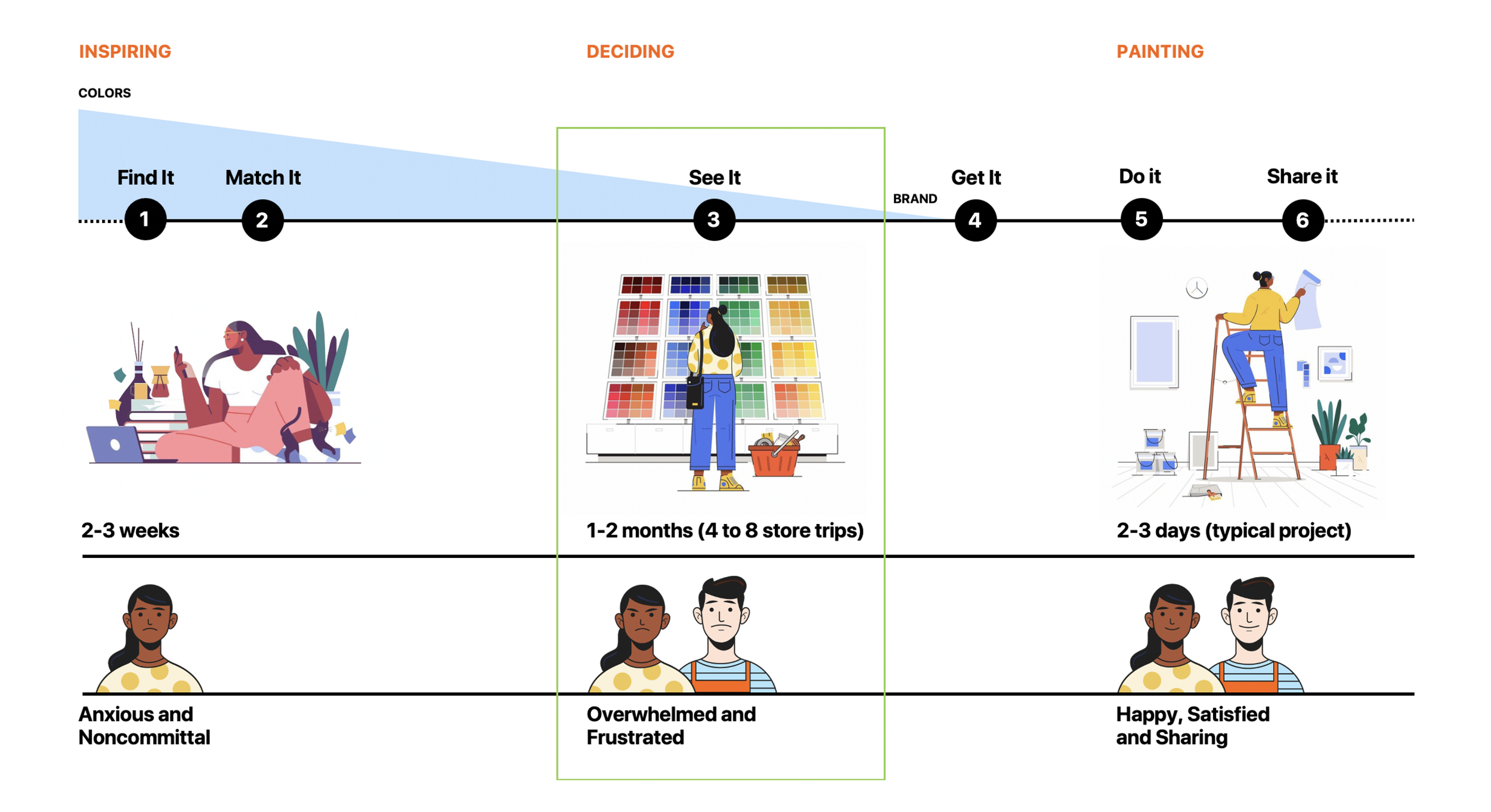
Home Depot initially approached us to solve the color-choice problem, but our discovery revealed a larger set of challenges and opportunities. To steer our solution and align teams, we established clear guiding principles:
Painting is personal.
Our insights made it clear that choosing paint isn’t a one-size-fits-all decision. People want options—but they also want space to express their own style. The experience needed to support both flexibility and creativity.
Seeing is believing.
Our insights made it clear that choosing paint isn’t a one-size-fits-all decision. People want options—but they also want space to express their own style. The experience needed to support both flexibility and creativity.
Projects come first.
People don’t start with “I need a color.” They start with “I want to paint this room.” This project-first mindset creates a web of interconnected decisions—prep, tools, finishes, coverage—that Home Depot’s current strategy didn’t fully account for. Addressing this gap opened a much broader opportunity.
The Response
Research showed that visualization—not brand messaging—was the true friction point. So rather than competing on marketing ideas, we leaned into technology.
I partnered with a VR developer in Kansas who had built edge-detection software, and together we created a low-fidelity prototype that let users capture a wall and instantly change color and sheen. We tested it with customers, recorded sessions, and used those insights to power our Home Depot response.

We ultimately won the business, but some senior leaders still questioned whether we were focused on the right problem. Their view was: “Color selection is the core issue. Customers aren’t thinking in terms of projects — they just need to pick a color, see it on the wall, and purchase. Everything after that is secondary.”

To ground the discussion in reality, we took the executives into the store. Each team got a project list, $25, and 30 minutes to shop.
They walked away with a very different perspective. Their key insights: the store is hard to navigate, the challenge goes far beyond choosing a color, more choices create more confusion, and a 3×3 paint chip isn’t enough to make a confident decision.
The Solution
Building on the energy from the shopping immersion, we convened a cross-functional working group spanning business, technology, and digital experience. While the organization was rooted in SAFE, we infused new agile frameworks that accelerated alignment, strengthened collaboration, and enabled the team to define a clearer, more effective sprint identity.

We aligned on a vision to create a paint experience where customers can pick a color, preview it, and buy it in one trip. Ongoing research led us to the key moments—“find it, match it, see it”—which shaped the solution and guided the added capabilities.
Core experience.
-
Find It.
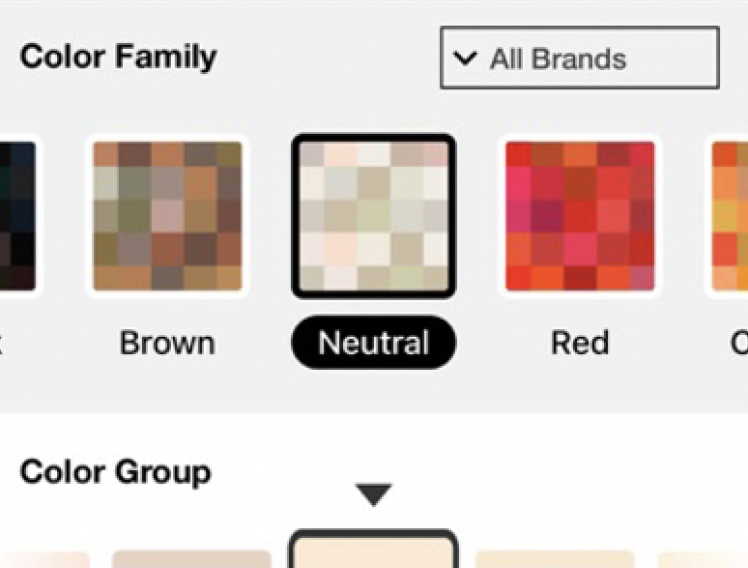
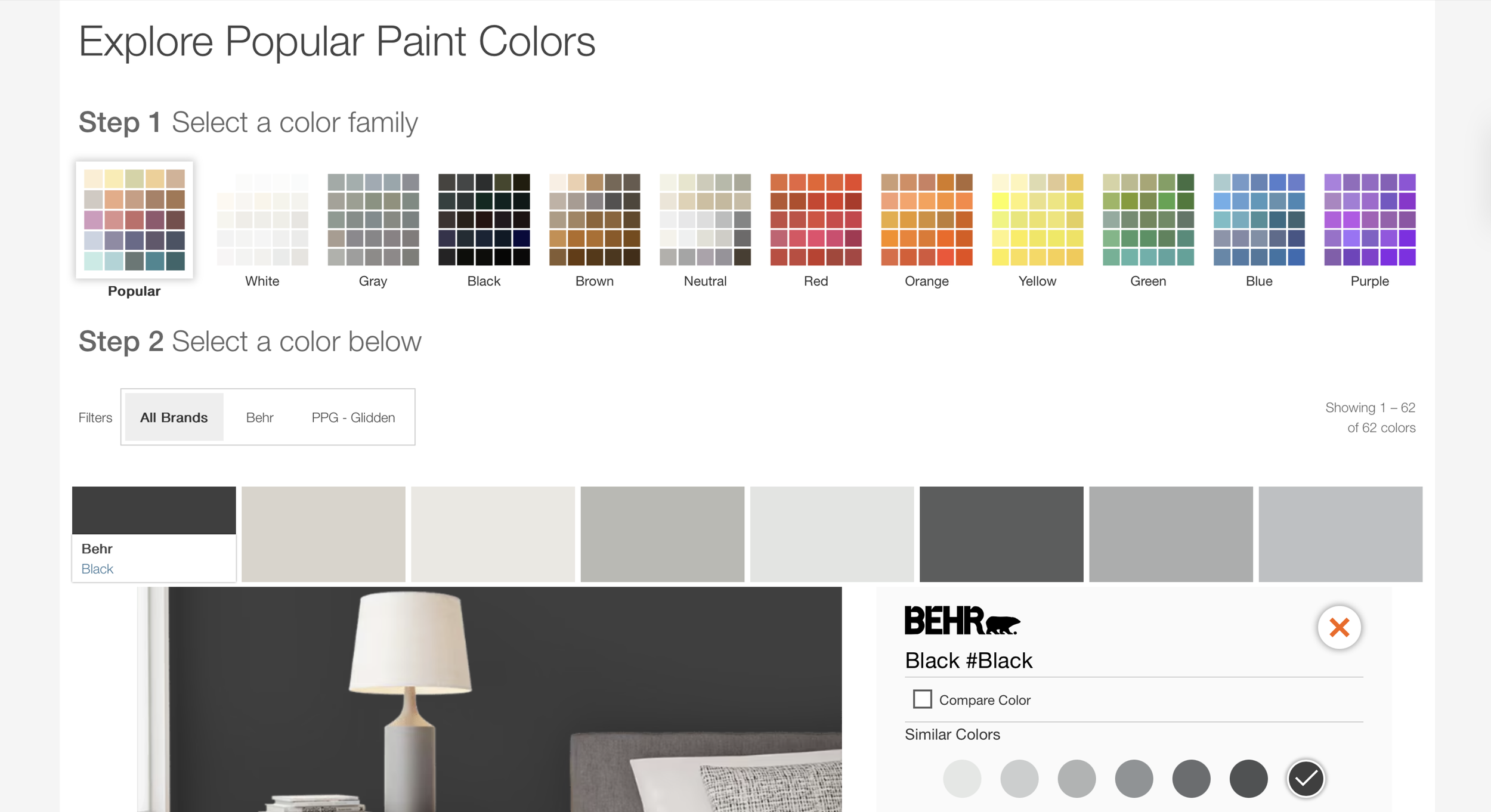
We built a flexible search experience enabling customers to browse by color family, search by name or brand, or find inspiration-based matches. Through a Pinterest API integration, users can access broader inspiration and save colors and projects seamlessly across apps.
-
Match It.
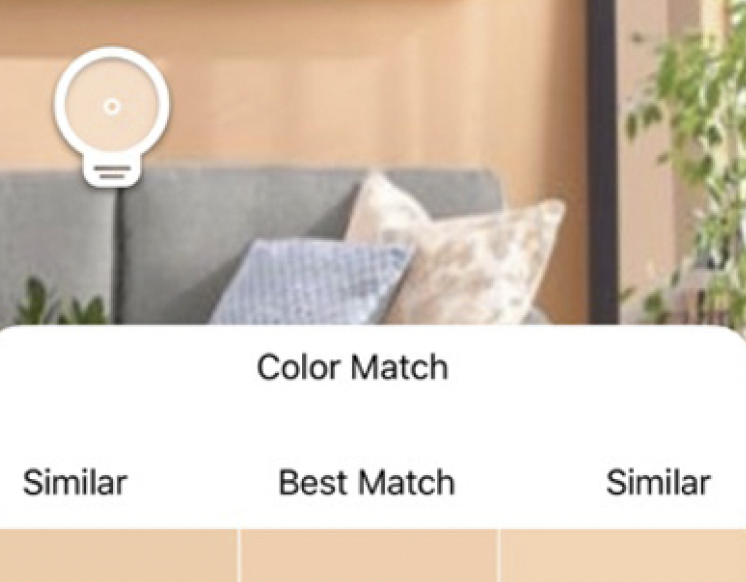
Customers often wanted to match an existing color but couldn’t get it right. We built a photo-based matching tool that lets them upload or capture an image, tap a spot, and receive precise matches and related options.
-
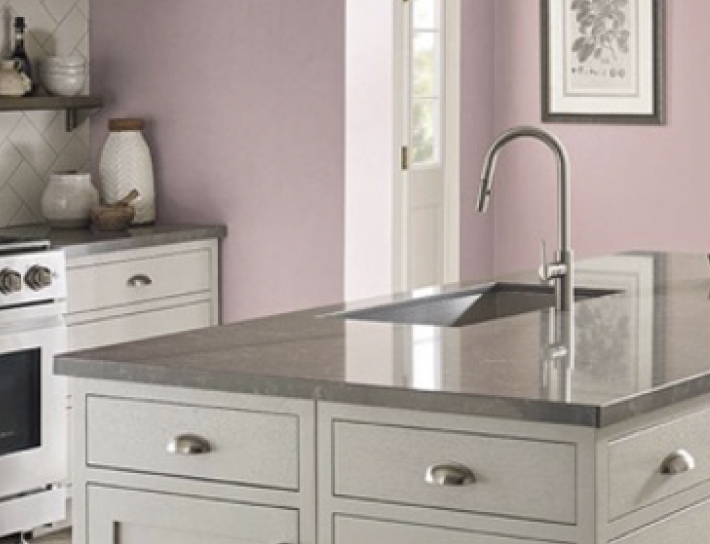
See It.
Augmented reality lets customers visualize a color in their room within seconds. The “See It in Your Space” feature maps around objects and accounts for lighting, providing an incredibly accurate preview before any paint goes on the wall.
Alongside features such as saving colors, ordering samples, and purchasing, we expanded the experience to support a project-first mindset—recommending complementary products to complete the room. We also saw a clear opportunity for Home Depot to establish a dedicated paint destination online, consistent with their native app experience.
Outcomes
“Augmented reality has been available within mobile for a while, but Salesforce helped us amplify its benefits across key categories and projects — the result is an intuitive, realistic experience grounded in what the customer needs. Under Brian’s direction, we were able to create real impact for the business. He pushed us to get more value early on and went above and beyond the initial pitch work to create a category-defining solution and strong business partnership.”
– Samara Tuchband, General Manager Online
#1
Home Depot moved to #1 in preferred category beating out Lowes (2018)
-2
Reduction in store visits based on surveyed customers (moved down from 3 to 4)
+90%
Daily Active User activity with average time on app around 30 minutes per session per day
9x
Increase in purchase intent based on converted cart data (MoM)