
From Design System to Intelligence System
Project Type: Design Transformation
Role: Design Executive and Strategy Lead
Deliverables: Strategy & Vision, Business Case, Agentic Operating Model, Design System Strategy
Introduction
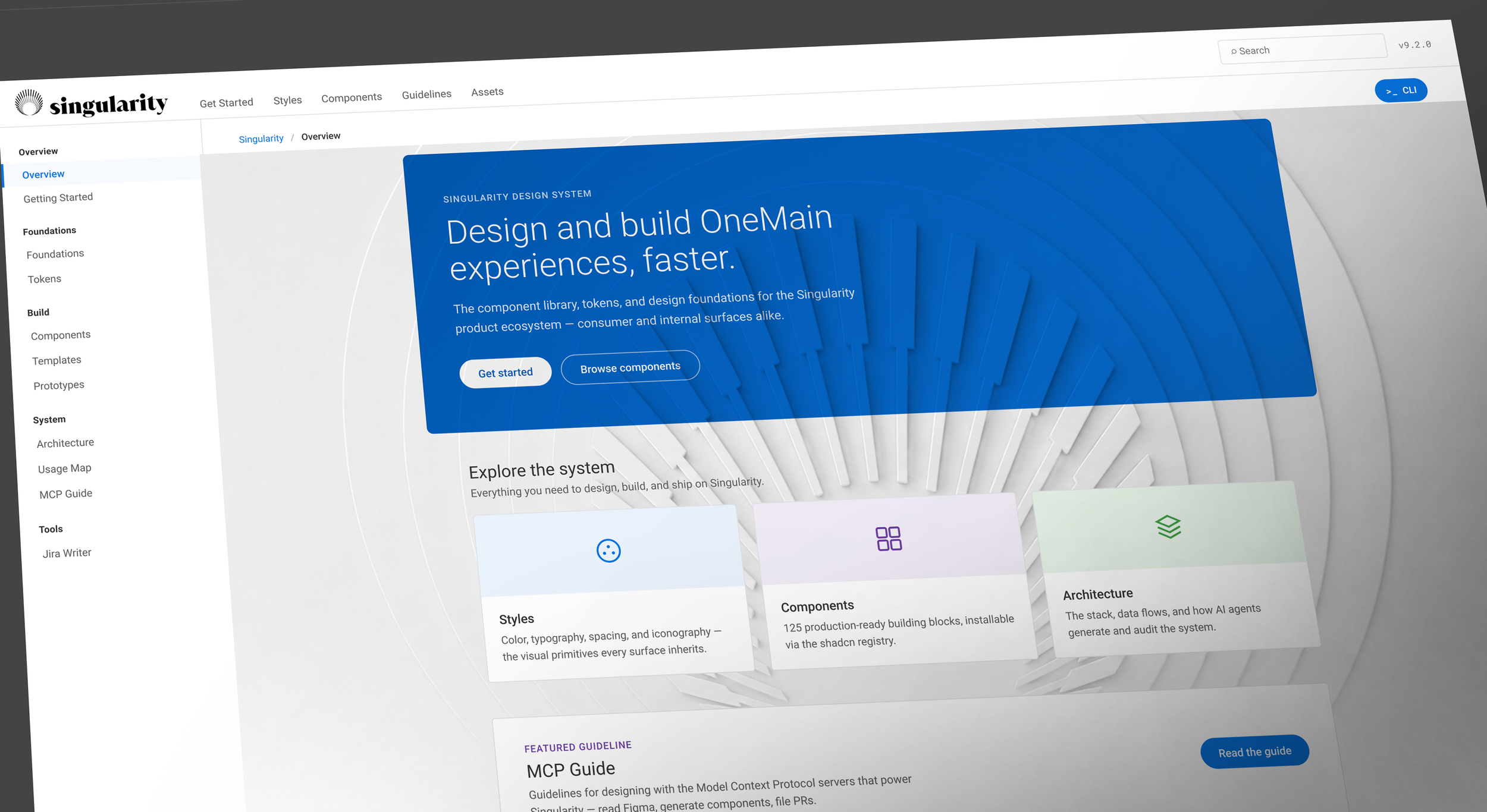
At OneMain Financial, we had established a new design system to create greater consistency and accelerate delivery across the organization. But demand was quickly outpacing our ability to scale it.
Design-system capacity was limited. Engineering support was constrained. And teams were still spending significant time finding information, locating existing patterns, documenting decisions, validating standards, coordinating stakeholders, and preparing work for implementation.
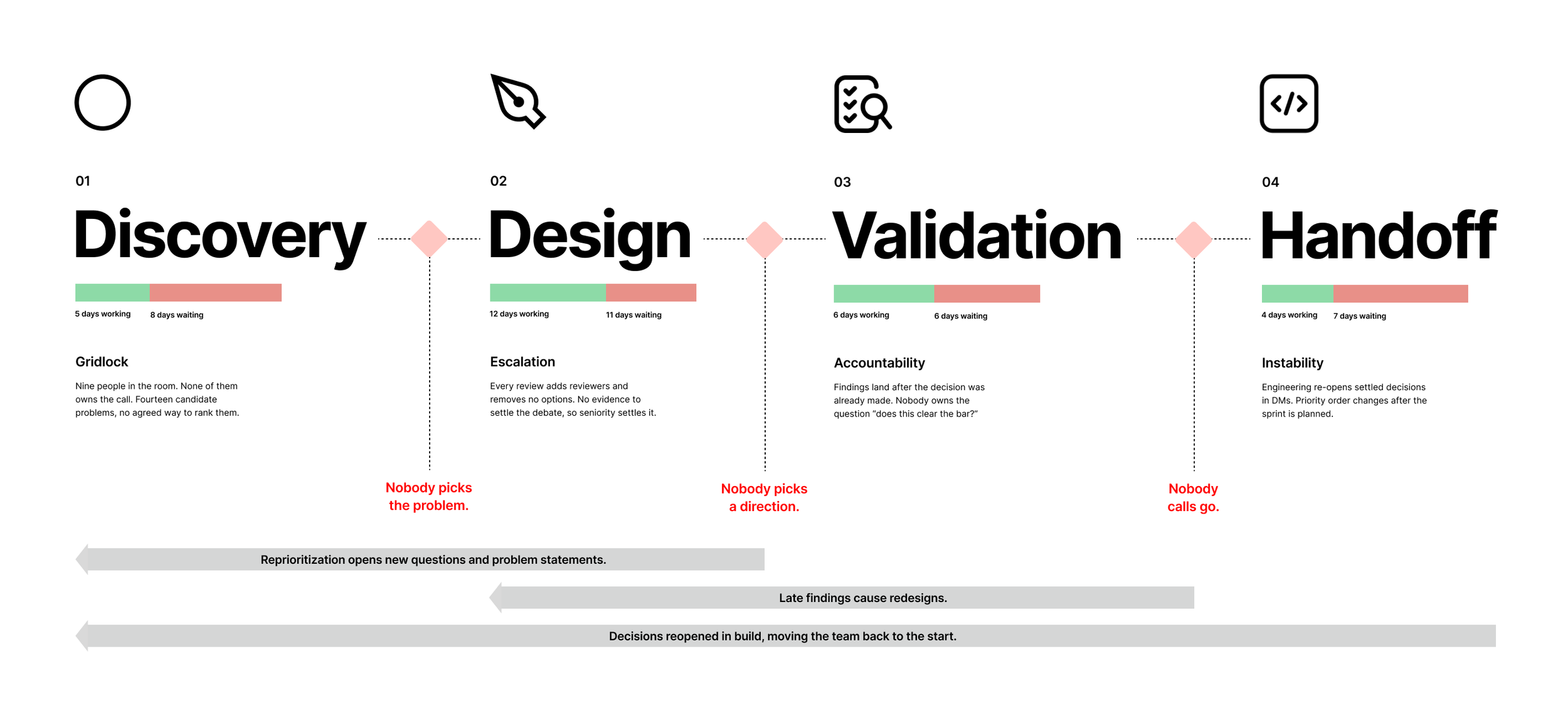
A representative initiative could require 8.5–10 weeks, 340–400 hours of design effort, 30+ tools, and coordination across 20+ stakeholders.
The system was designed to help the organization scale.
But the way we were operating it wasn't scaling.
Approach
I started by looking at where our time was actually going.
The biggest constraint wasn't creative capacity. It was everything surrounding it.
Much of the work required to move from an idea to implementation (searching, gathering context, synthesizing research, documenting, validating, coordinating, and preparing handoffs) was necessary, but also highly repeatable.
That changed the question I was asking: What if we didn't make designers work faster, but removed the work slowing them down?
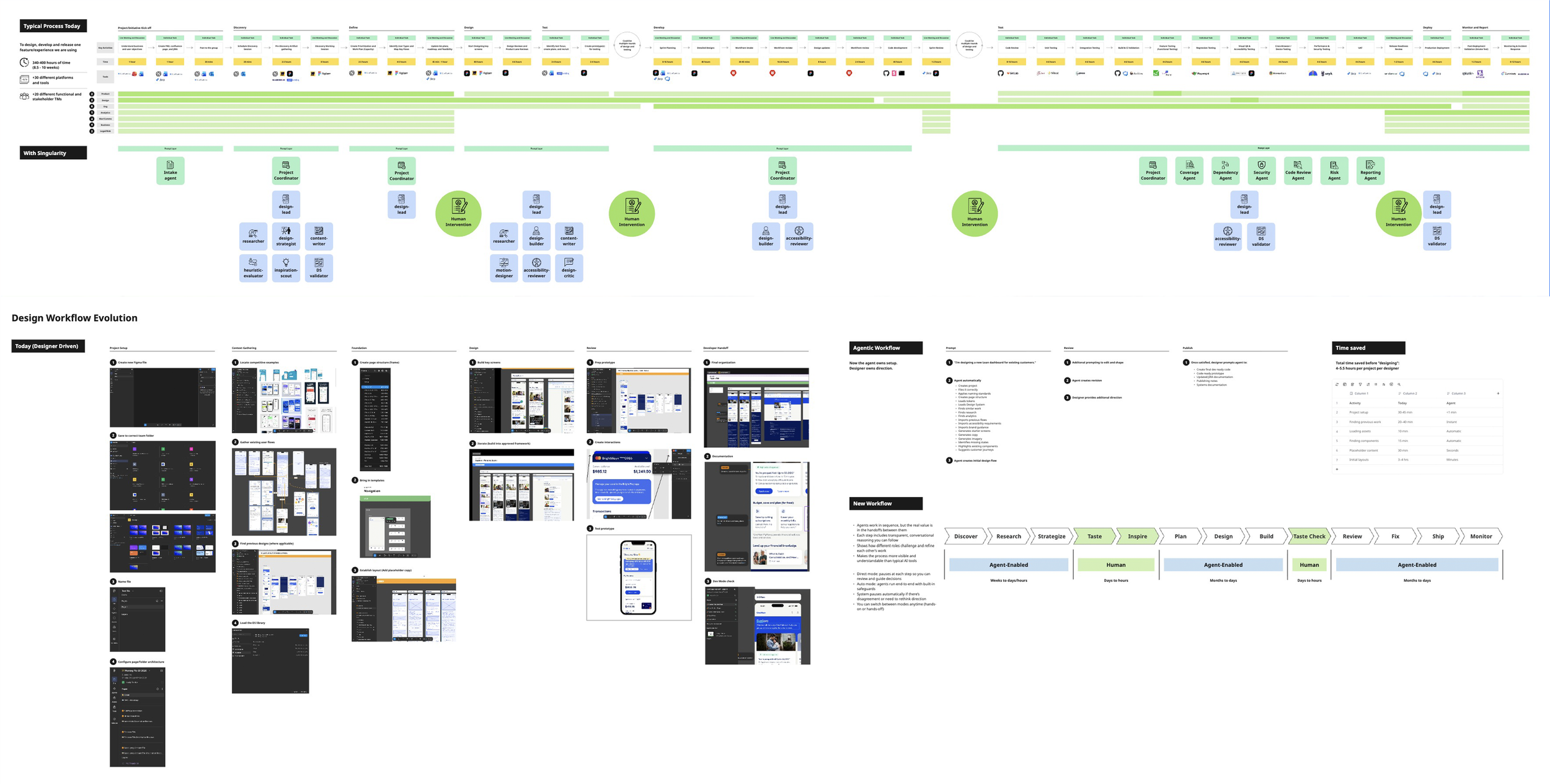
I mapped the existing workflow, quantified its organizational cost, and built a business case for an agent-supported operating model.
For a representative initiative, we modeled a shift from 340–400 hours to 180–220 hours of effort, creating the potential for approximately 45% less effort and $25–30K in reclaimed capacity per initiative.
The opportunity was no longer simply about AI.
It was about changing the economics of how design scaled.
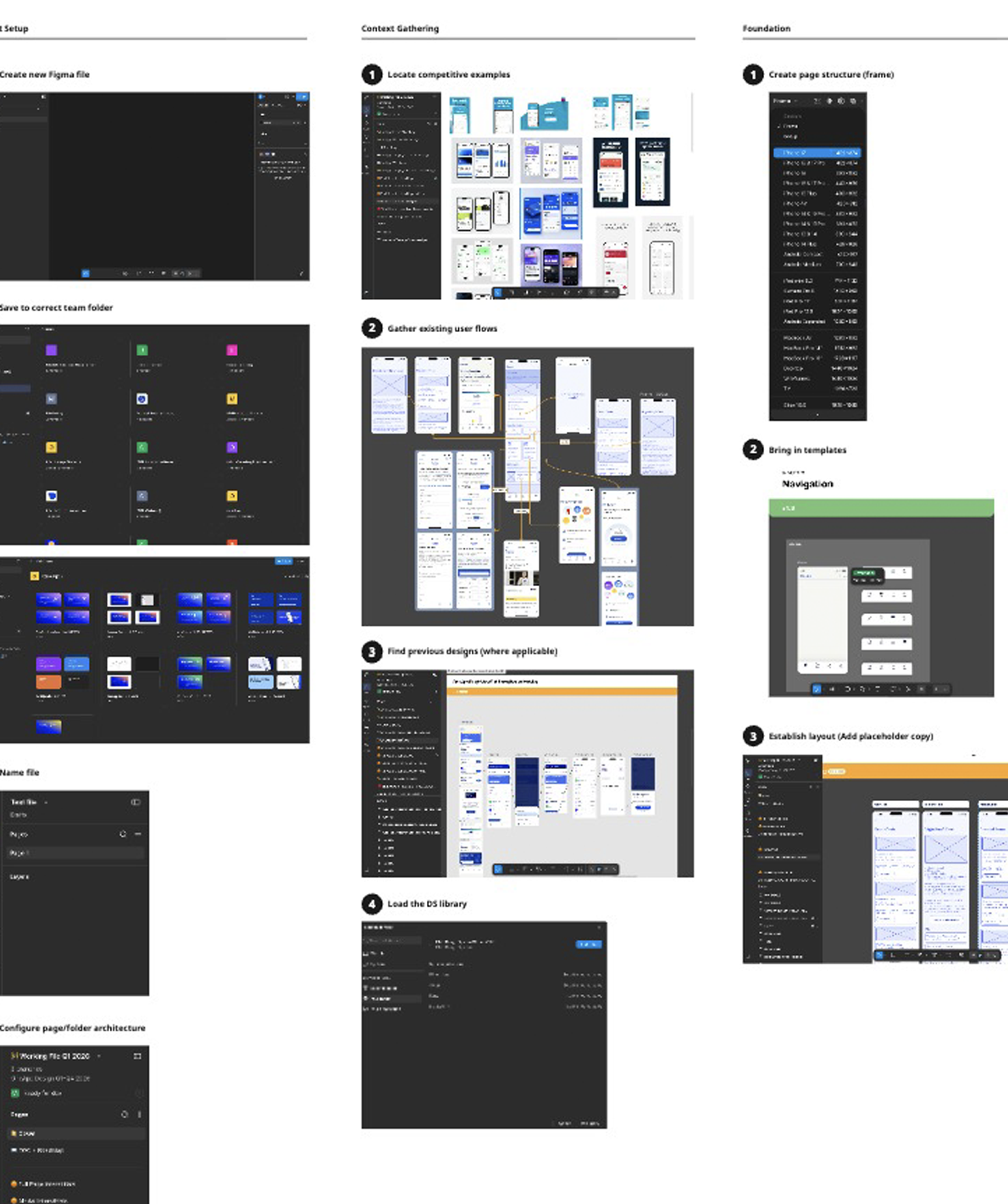
I uncovered a significant risk: the design workflow had become deeply dependent on Figma.
The Strategy
The initial idea was to use agents to automate repeatable work around design. But as we developed the model, I recognized a larger opportunity. The design system could become more than a library. It could become an infrastructure for agents.
Traditionally, designers had to know where knowledge lived, which component to use, whether a pattern already existed, and how to interpret system standards.
Instead, we could make components, patterns, research, policies, accessibility requirements, content guidance, and implementation rules available to agents as structured, retrievable context.
Rather than requiring people to constantly search for the system: the system could come to them.
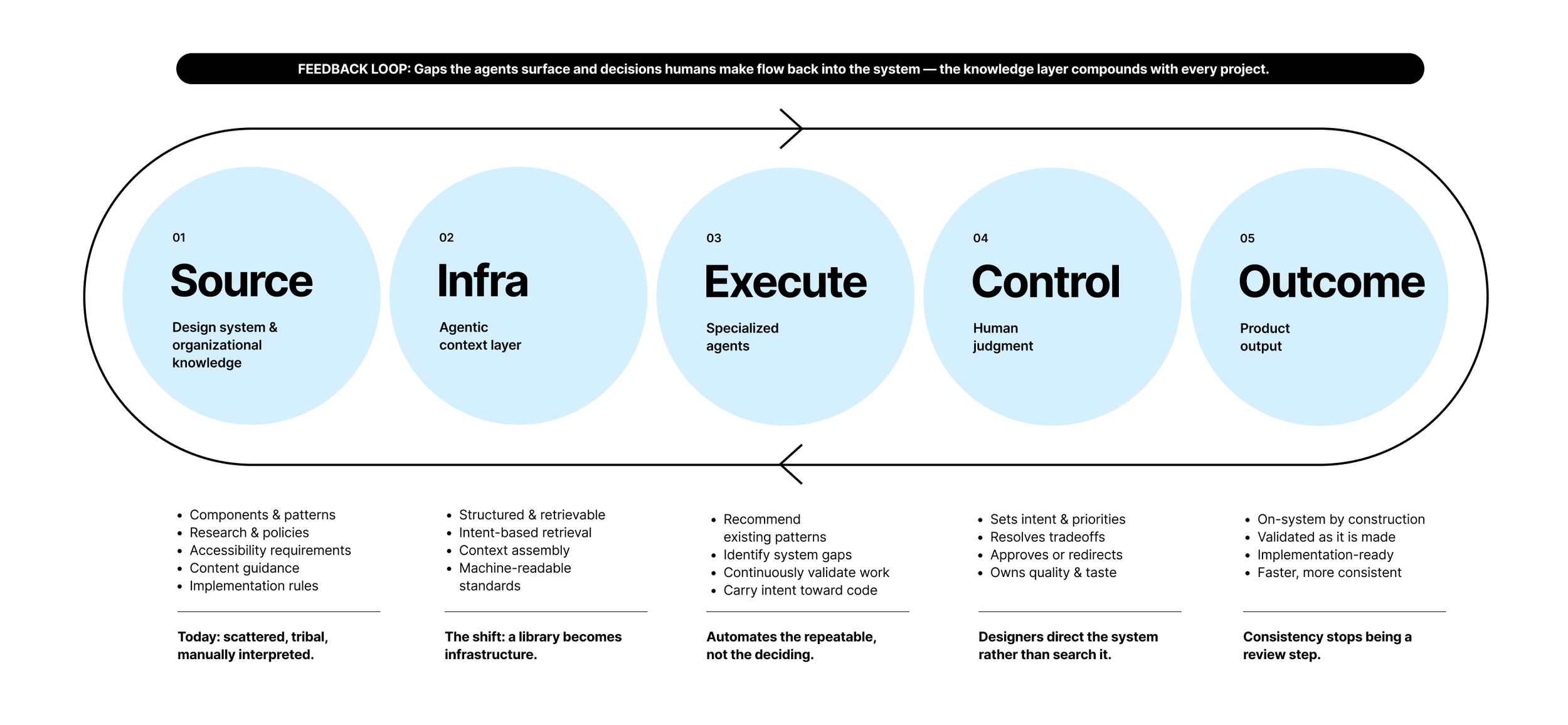
Agents could retrieve relevant knowledge based on intent, assemble context, recommend existing patterns, identify system gaps, continuously validate work, and carry that intelligence forward toward implementation.
The Response
The goal wasn't autonomous design. It was autonomous orchestration.
I designed an operating model that intentionally separated the work so agents could accelerate from the decisions humans needed to own.
Humans established the problem, intent, constraints, and success criteria.
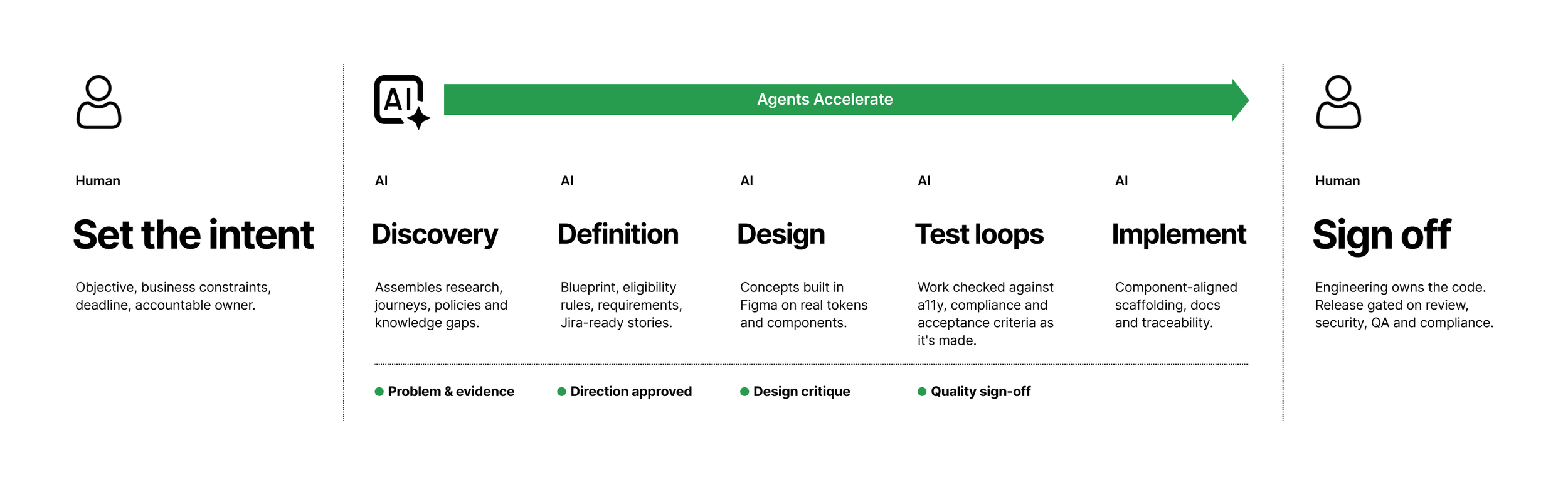
Agents accelerated discovery by retrieving research, analytics, existing journeys, policies, patterns, and prior work. They helped structure requirements and edge cases, assemble system-aligned design context, continuously evaluate accessibility and standards, and prepare documentation and implementation requirements.
Designers remained responsible for the work requiring customer understanding, creativity, taste, ambiguity, tradeoffs, and judgment.
Engineering and accountable teams remained responsible for production. Agents accelerated the work. Humans remained accountable for the outcome.
Proving the Model
We deliberately focused the pilot on a real product workflow, and not an AI demonstration.
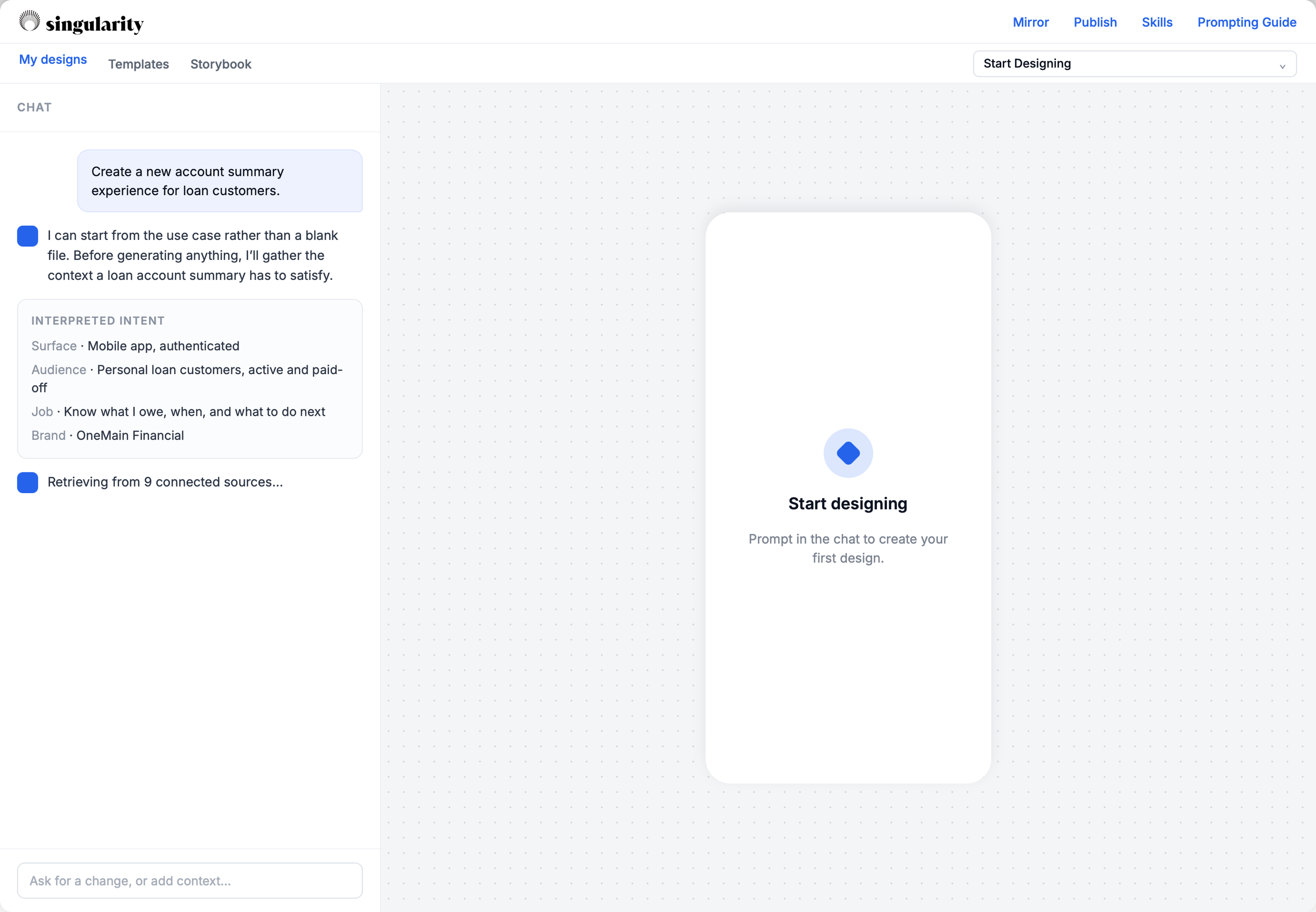
Starting with intent
A designer could begin with intent: “Create a compliant experience for an eligible customer.”
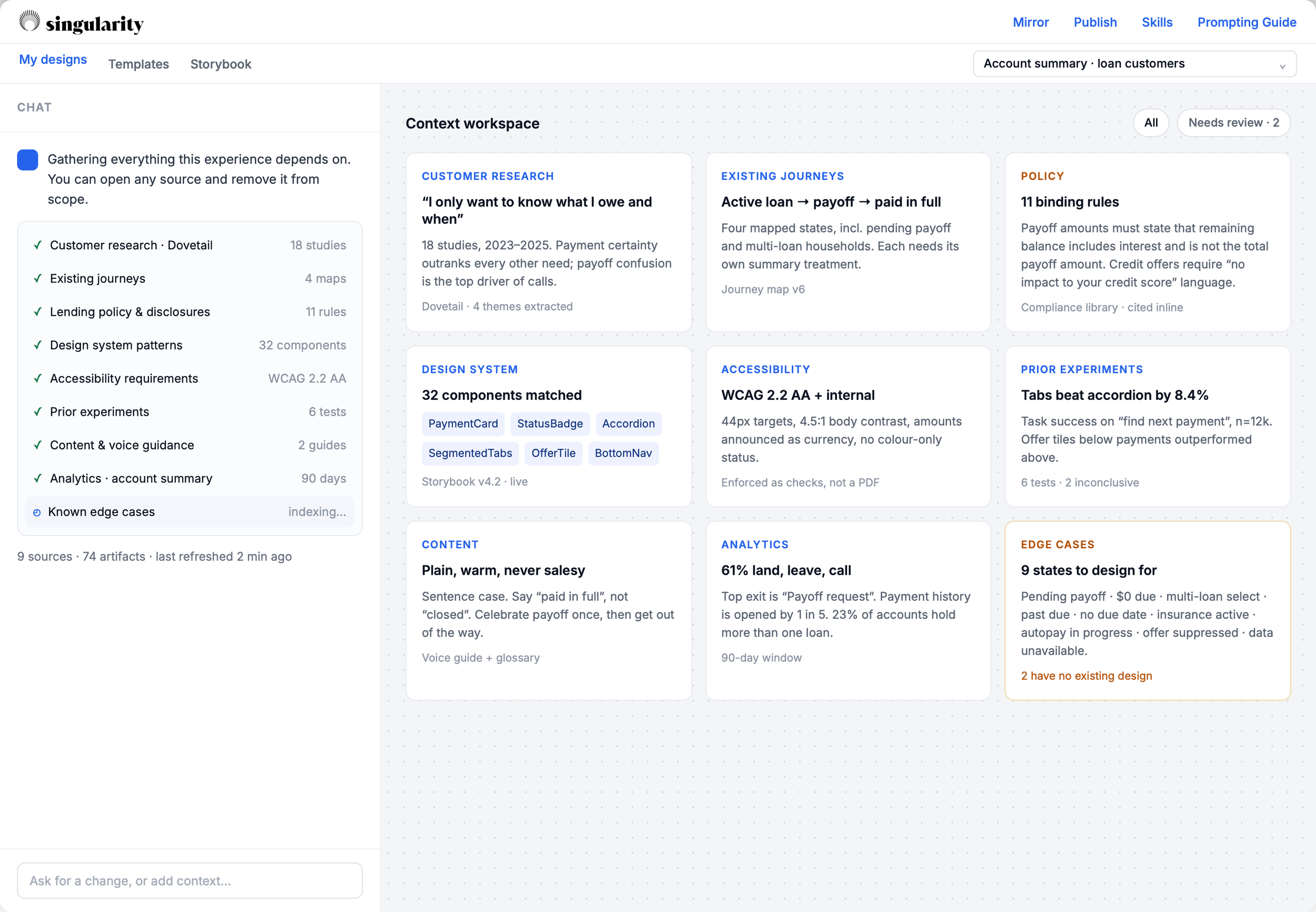
Gathering context
Instead of manually assembling everything required to start, agents could retrieve customer research, existing journeys, applicable policies, design-system patterns, accessibility requirements, prior experiments, content guidance, analytics, and known edge cases.
Building the foundation
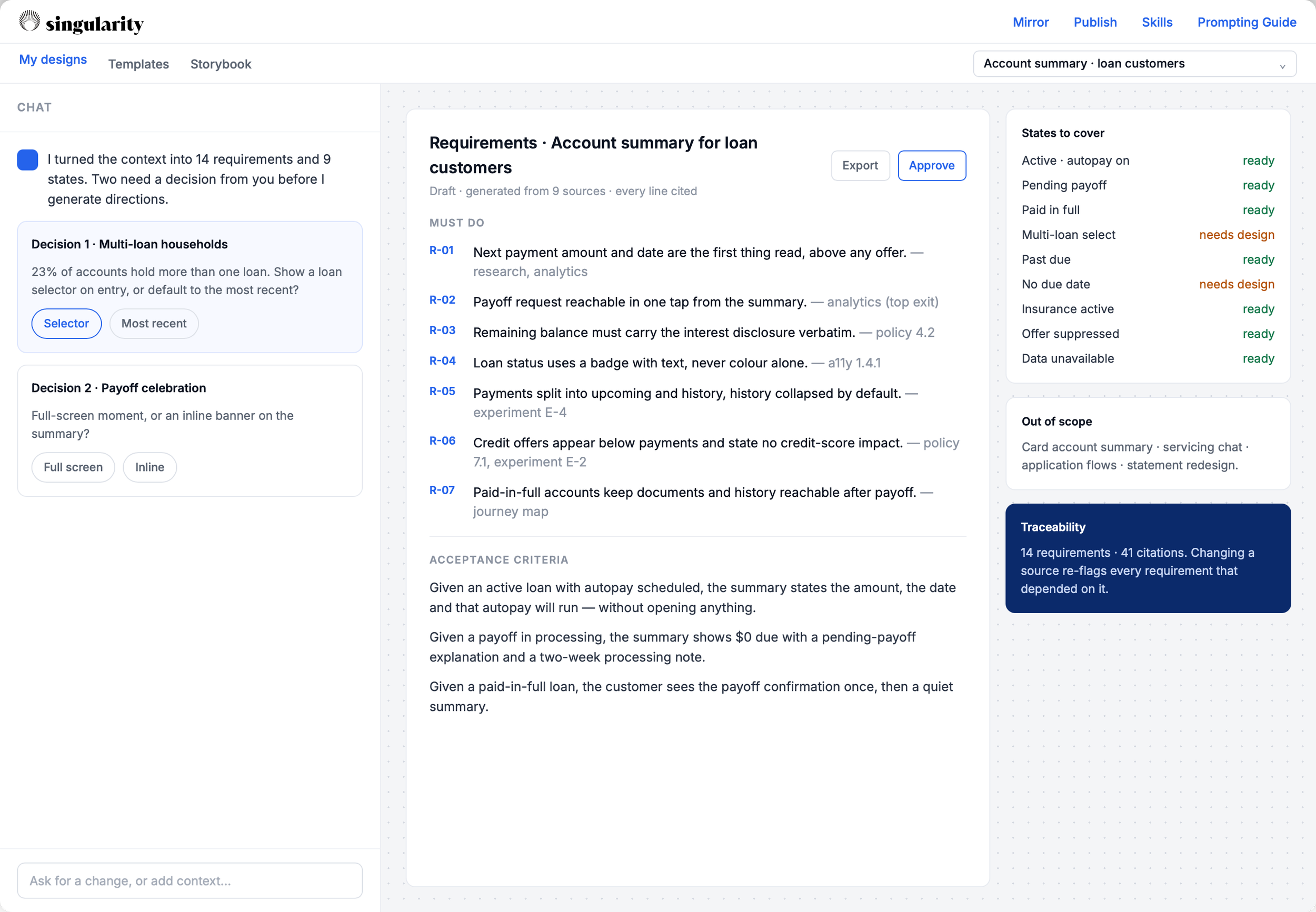
From there, the system could help structure requirements and assemble the design environment.
Informed iterations
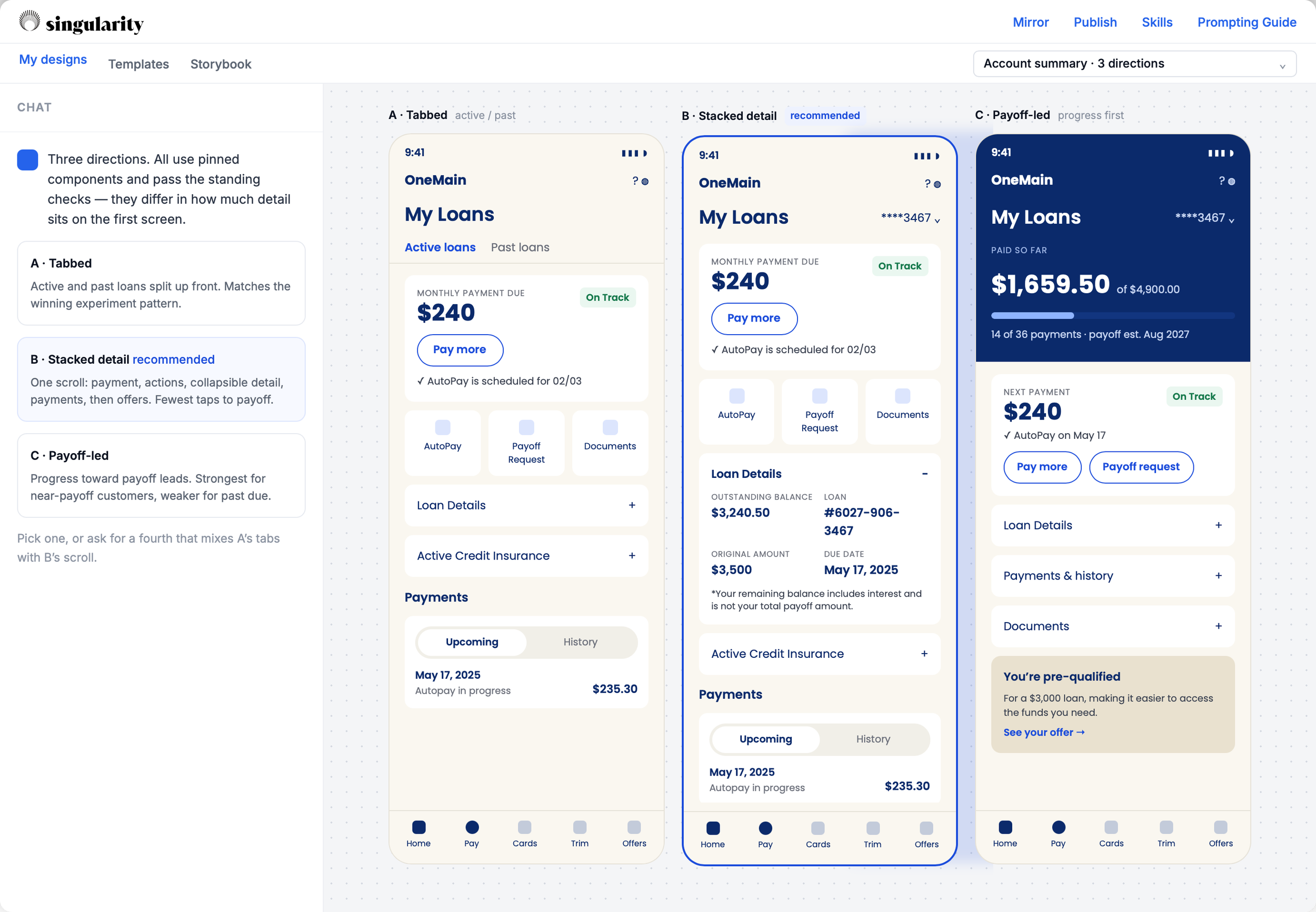
With context set, the agents generate initial directions, continuously validating the work in partnership with the human, and prepare a recommendation for review or implementation.
Validated results
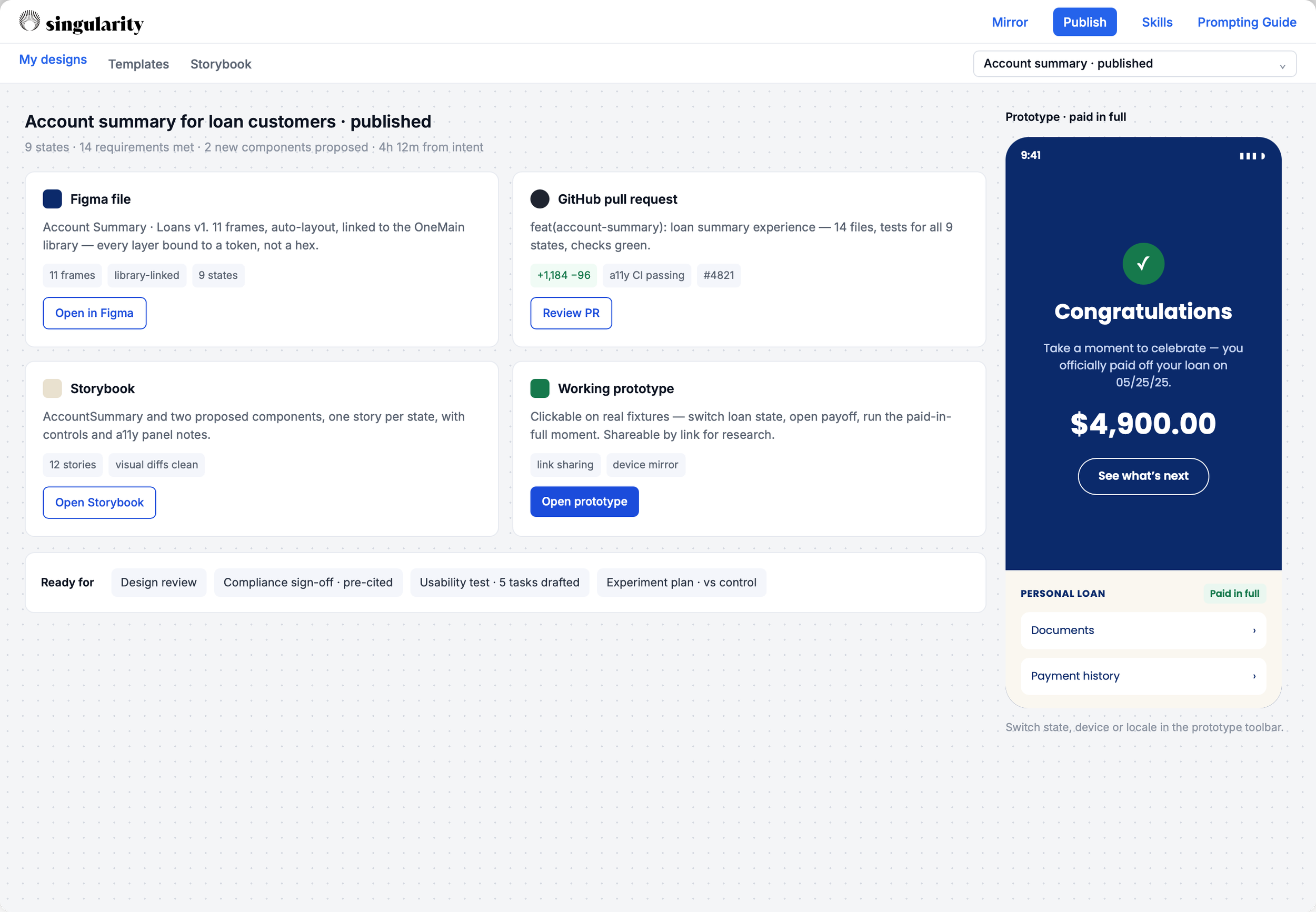
Agents perform final validations and ready files for standard or customized outputs depending on the need.
Key Insight
Faster creation meant faster learning. System-aligned prototypes could give stakeholders something meaningful to react to much earlier, reducing the distance between an idea and meaningful feedback. Humans remained at the moments that mattered most: Intent. Judgment. Taste. Tradeoffs. Approval. Accountability.
Outcomes
The pilot gave us evidence. The business case showed what the model could mean at scale. At portfolio scale, that represented a potential $2.5–3M across 100 initiatives annually, with significantly greater impact as adoption expanded.
But cost reduction wasn't the outcome I found most compelling.The bigger opportunity was organizational capacity.
More time for customer problems. More experimentation. More system adoption. More reuse. More continuous validation. And less organizational energy spent searching, coordinating, documenting, and recreating what we already knew.
~45%
Potential reduction in effort
From 340–400 hours to 180–220 hours per representative initiative
“What stood out was Brian’s ability to see beyond the immediate constraint. He turned a design-system capacity problem into a much larger opportunity—using AI to rethink how knowledge, design, and engineering could work together. He created the vision, built the business case, and gave the organization a practical path to prove it.”
— Larry Fitzpatrick, EVP & CTO, OneMain Financial
+60%
Modeled increase in throughput
More initiatives delivered with
existing capacity
+50%
Modeled faster time to market
Sequential work compressed through parallel, agent-supported delivery
+$30K
Modeled capacity reclaimed
Represented a potential $2.5–3M across 100 initiatives annually
The Bigger Transformation
What started as an effort to scale a design system changed how I thought about the design organization itself.
Traditional design systems create leverage by encoding reusable decisions into components, patterns, and standards.
Agentic systems can extend that leverage by making those decisions retrievable, interpretable, and actionable throughout product development.
Design systems used to scale components. The next generation can scale organizational intelligence.
That changes the role of the system from a library of reusable UI to a shared intelligence layer for product development. And it changes the role of designers.
Less time managing process.
More time solving customer problems.
I recognized the constraint, quantified the opportunity, built the business case, aligned the organization around a different operating model, and led the work to prove it.